
Dip exercises are a cornerstone of upper-body strength training, offering a range of variations that cater to different fitness levels. From the basic parallel bar dip to advanced techniques like the Korean dip, these exercises have evolved to challenge and develop various muscle groups. This article explores the progression of dip exercises and their impact on strength training routines.
Basic Dip Techniques
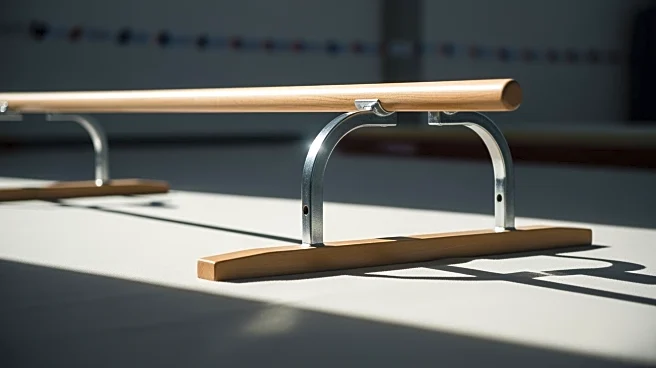
The standard dip, often referred to as the parallel bar dip, is
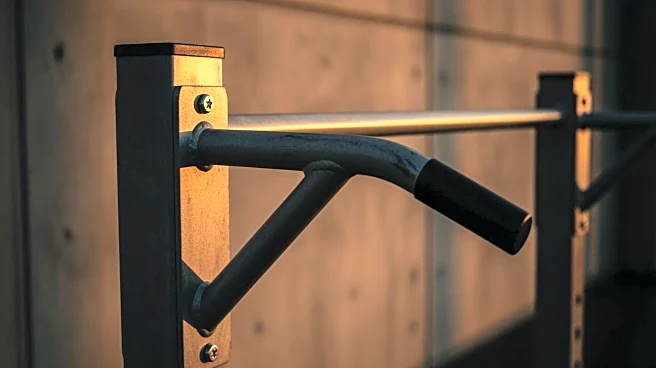
the foundation of dip exercises. It primarily targets the triceps, with significant involvement of the anterior deltoid, pectoralis muscles, and rhomboid muscles of the back. To perform a standard dip, the exerciser supports themselves on a dip bar with arms straight down and shoulders over the hands, then lowers the body until the arms are bent to a 90-degree angle at the elbows, and lifts back to the starting position.
For those new to dip exercises, the bench dip offers a lighter variation. This exercise involves placing the hands on a bench directly underneath the shoulders, with legs straightened and positioned horizontally. The feet rest on another bench in front of the exerciser, reducing the total weight lifted and making it accessible for beginners.
Intermediate Variations
As exercisers progress, they can incorporate weighted dips to increase resistance and promote strength and hypertrophy gains. This can be achieved by using a dip belt, weighted vest, or holding a dumbbell between the knees or ankles. These variations allow for progressive overload, a key principle in strength training.
Another intermediate variation is the straight bar dip, which involves a more pronounced forward lean and hip flexion to maintain the center of gravity. This technique is usually executed with a pronated grip but can also be done supinated, offering a different challenge to the muscles involved.
Advanced Dip Techniques
For those seeking a greater challenge, advanced dip variations like the Korean dip and Russian dip provide increased difficulty. The Korean dip is performed on a single straight bar with the bar behind the body, requiring significant strength and control. The Russian dip involves lowering the forearms until they rest on the bar after the standard eccentric phase, increasing elbow extension demand to activate the triceps brachii.
These advanced techniques are typically performed by elite calisthenics athletes and gymnasts, showcasing the adaptability and progression of dip exercises. They highlight the potential for dips to evolve and challenge even the most experienced exercisers.
In summary, dip exercises offer a progression from basic to advanced techniques, allowing individuals to tailor their strength training routines to their fitness levels. Whether starting with standard dips or advancing to complex variations, these exercises play a crucial role in developing upper body strength and enhancing overall fitness.