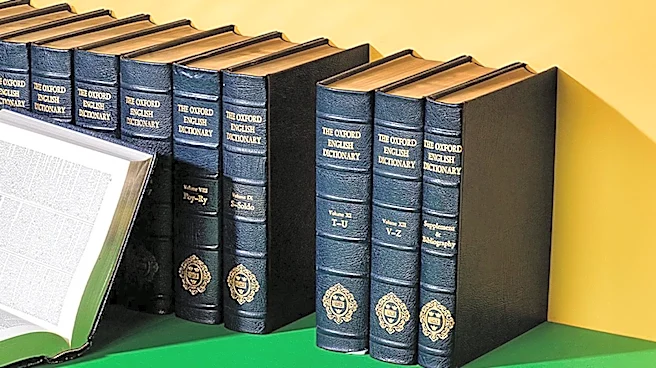








Noah Webster's dictionaries have played a significant role in shaping American English. His dedication to creating a comprehensive and standardized dictionary was driven by a desire to establish a distinct American identity. Over the years, Webster's dictionaries have evolved, leaving a lasting impact on the language and culture of the United States.
The Birth of Webster's Dictionary
In 1806, Noah Webster published his first dictionary, "A Compendious Dictionary of the English Language."
This initial effort laid the groundwork for his more ambitious project, "An American Dictionary of the English Language," which he began in 1807. Webster's goal was to create a dictionary that reflected the unique characteristics of American English, which varied widely across the country.
To achieve this, Webster embarked on a rigorous study of twenty-eight languages, including Old English, Greek, Latin, and Sanskrit, to understand the etymology of words. His dedication to this project was immense, taking twenty-six years to complete. The result was a dictionary that contained seventy thousand words, twelve thousand of which had never appeared in a published dictionary before.
Standardizing American English
Webster's dictionary was instrumental in standardizing American English. He advocated for spelling reforms that aligned with American pronunciation, such as changing "centre" to "center" and "colour" to "color." These changes were not entirely new but were existing alternatives that Webster popularized for their simplicity and phonetic accuracy.
His dictionary also included American words that were absent from British dictionaries, such as "skunk" and "squash." By incorporating these words, Webster's dictionary helped define a distinct American lexicon. Despite initial resistance, his work gradually gained acceptance and became a cornerstone of American English.
Legacy and Continued Influence
Webster's dictionaries have had a profound and lasting impact on American English. Although his first dictionary sold only 2,500 copies, it laid the foundation for future editions. After Webster's death in 1843, the rights to his dictionary were acquired by George and Charles Merriam, leading to the creation of the Merriam-Webster brand.
Today, Merriam-Webster dictionaries continue to be authoritative references for American English. Webster's vision of a standardized American language has been realized, and his dictionaries remain a testament to his dedication and influence. By defining the language of a nation, Noah Webster helped shape the cultural and linguistic identity of the United States.