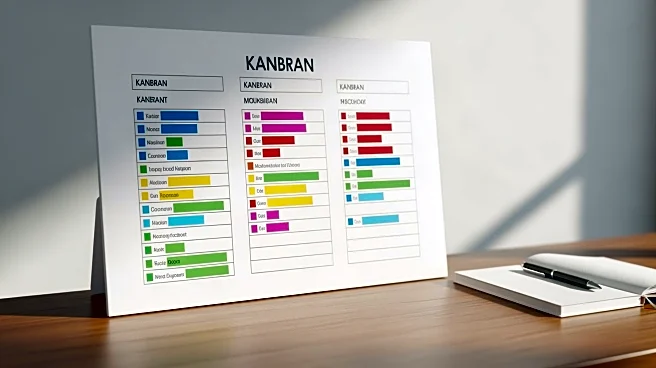








Kanban boards are a vital tool in implementing the Kanban work management system, providing a visual representation of work at various stages of a process. These boards help teams coordinate tasks and manage workflows effectively. This article explores the structure and function of Kanban boards, highlighting their role in optimizing workflow management.
Structure of Kanban Boards
A Kanban board visually depicts work items using cards and columns. Each card represents a work item,
while columns represent different stages of the process. As work progresses, cards are moved from left to right across the board, providing a clear visual of the workflow. This setup allows teams to see the status of tasks at a glance, facilitating better coordination and communication.
Kanban boards can be simple or complex, depending on the needs of the organization. A basic board might have columns labeled "to-do," "doing," and "done," while more complex boards can subdivide "in progress" work into multiple columns to visualize the flow of work across a value stream map. Additionally, boards may include horizontal swimlanes to represent different types of work or teams.
Function of Kanban Boards in Workflow Management
The primary function of a Kanban board is to visualize work in progress, helping teams identify bottlenecks and overcommitments. By making the workflow visible, teams can optimize processes and improve efficiency. The Project Management Institute describes Kanban boards as a "visualization tool that shows work in progress to help identify bottlenecks and overcommitments, thereby allowing the team to optimize the workflow."
Kanban boards also play a crucial role in managing work in progress (WIP). By setting WIP limits for each stage, teams can prevent overloading and ensure a smooth flow of work. This approach helps maintain focus and reduces the risk of errors or delays caused by multitasking.
Applications of Kanban Boards
Kanban boards are versatile tools used in various industries, from manufacturing to software development. They are particularly effective in environments where work needs to be managed dynamically and efficiently. In software development, for example, Kanban boards help teams track progress, prioritize tasks, and manage resources effectively.
The growing popularity of Kanban boards has led to their integration into many personal and project management applications. These digital boards offer the same benefits as physical boards, with the added advantage of real-time updates and remote accessibility.
In summary, Kanban boards are an essential component of the Kanban system, providing a clear and effective way to manage workflows. By visualizing work and setting WIP limits, these boards help teams optimize processes, improve efficiency, and achieve better outcomes.