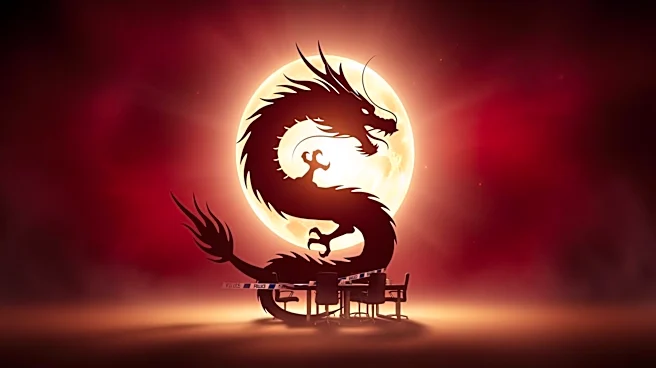







The Dragon holds a unique place in the Chinese zodiac, representing power, strength, and good fortune. As the fifth animal in the zodiac cycle, the Dragon is associated with the Earthly Branch symbol chen and is revered for its mythical qualities. Unlike other zodiac animals, the Dragon is not a real creature but a legendary one, embodying the aspirations and dreams of those born under its sign. This article delves into the cultural significance and symbolism
of the Dragon, highlighting its impact on Chinese traditions and beliefs.
Cultural Significance of the Dragon
In Chinese culture, the Dragon is a symbol of power and authority. It is often depicted in art and folklore as a majestic creature capable of controlling the elements, particularly water and rain. This association with water is reflected in the Dragon's role in the zodiac, where it is believed to bring rain and prosperity to the land. The Dragon's mythical status elevates it above other zodiac animals, making it a symbol of imperial power and divine protection.
The Dragon's influence extends beyond China, with variations of its symbolism appearing in other cultures. In Thailand, Cambodia, Laos, Myanmar, and Sri Lanka, the Dragon is replaced by the naga, a serpent-like creature with similar attributes. This substitution underscores the Dragon's universal appeal and its ability to adapt to different cultural contexts. Despite these variations, the Dragon remains a potent symbol of strength and good fortune, revered by those who seek its blessings.
The Dragon's Role in the Zodiac Cycle
The Dragon's position as the fifth animal in the zodiac cycle is significant. It is part of the first trine group, which includes the Rooster and the Rat. This grouping is believed to bring balance and harmony, with each animal complementing the others' strengths. The Dragon's compatibility with the Rooster and Rat highlights its role as a mediator and leader, capable of fostering cooperation and unity.
The Dragon's influence is also evident in the birth rates during its zodiac year. Countries with substantial Chinese populations often experience spikes in births during the Year of the Dragon, as it is considered a lucky year. Parents hope that their children born under the Dragon sign will inherit its positive traits, such as ambition, courage, and success. This belief in the Dragon's auspicious qualities underscores its importance in Chinese culture and its enduring legacy.
Variations and Adaptations of the Dragon Symbol
Throughout history, the Dragon has undergone various adaptations in different cultures. During China's Cultural Revolution, there was an attempt to replace the Dragon with the giant panda, although this movement was short-lived. In the Gurung zodiac, the Dragon is replaced by the eagle, while in the Old Turkic calendar, it is substituted by a fish or crocodile. These changes reflect the Dragon's ability to evolve and remain relevant across different societies.
Despite these adaptations, the Dragon's core symbolism remains intact. It continues to represent power, luck, and prosperity, inspiring those who seek its guidance. The Dragon's mythical nature allows it to transcend cultural boundaries, making it a universal symbol of hope and aspiration. As the world continues to change, the Dragon's legacy endures, reminding us of the power of dreams and the potential for greatness.