


Capricornus is a fascinating constellation in the southern sky, known for its unique representation as a sea goat. Despite being the smallest constellation in the zodiac, it holds significant interest for astronomers and astrology enthusiasts alike. This article delves into the characteristics and neighboring constellations of Capricornus, providing a comprehensive look at its place in the celestial sphere.
Characteristics of Capricornus
Capricornus is recognized as the smallest
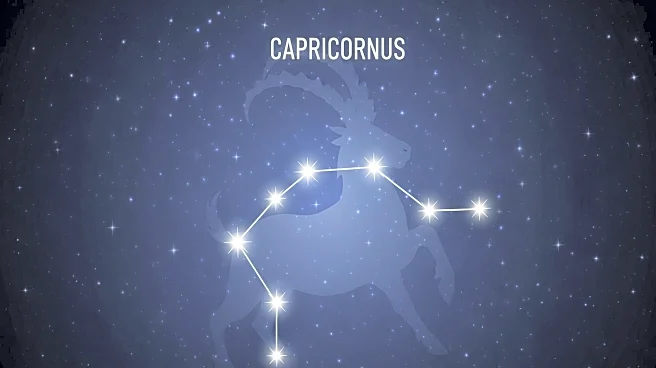
constellation in the zodiac, yet it carries a distinct identity with its depiction as a sea goat. This mythical creature combines the features of a goat and a fish, symbolizing a blend of terrestrial and aquatic elements. The constellation's compact size does not diminish its importance, as it remains a key part of the zodiac, which is a band of the sky divided into twelve equal parts, each associated with a specific constellation.
The constellation is located in the southern celestial hemisphere, making it more visible from the southern parts of the Earth. Its position in the sky is marked by a collection of stars that form the shape of a goat, with some interpretations also including a fish tail. This unique representation has intrigued astronomers and astrologers for centuries, contributing to its enduring legacy in both scientific and cultural contexts.
Neighboring Constellations
Capricornus is bordered by several other constellations, each with its own distinct features and stories. To the north, it is bordered by Aquila, a constellation representing an eagle. This proximity to Aquila adds to the rich tapestry of mythological and astronomical narratives that surround Capricornus.
To the east, Capricornus is bordered by Sagittarius, another prominent zodiac constellation known for its depiction as an archer. The presence of Sagittarius nearby highlights the interconnectedness of the zodiac constellations, as they form a continuous band across the sky. This arrangement allows for a seamless transition from one constellation to the next, creating a celestial map that has guided humans for millennia.
Other neighboring constellations include Microscopium, Piscis Austrinus, and Aquarius. Each of these constellations contributes to the overall structure of the night sky, providing context and contrast to the unique features of Capricornus. Together, they form a celestial neighborhood that is both diverse and interconnected.
The Sun's Journey Through Capricornus
The Sun enters the constellation of Capricornus from December 22 to January 19, marking a significant period in the zodiac calendar. This time frame corresponds to the winter solstice in the Northern Hemisphere, a time traditionally associated with reflection and renewal.
During this period, the Sun's position in Capricornus is said to influence various astrological interpretations, with the constellation's characteristics being reflected in the traits of individuals born under this sign. The sea goat's symbolism of resilience and adaptability is often highlighted in these interpretations, adding a layer of depth to the astrological significance of Capricornus.
In conclusion, Capricornus may be the smallest zodiac constellation, but its impact is far-reaching. From its unique representation as a sea goat to its position among neighboring constellations, Capricornus offers a rich tapestry of astronomical and astrological insights. Its presence in the sky continues to captivate and inspire those who gaze upon it, making it a timeless feature of the celestial sphere.