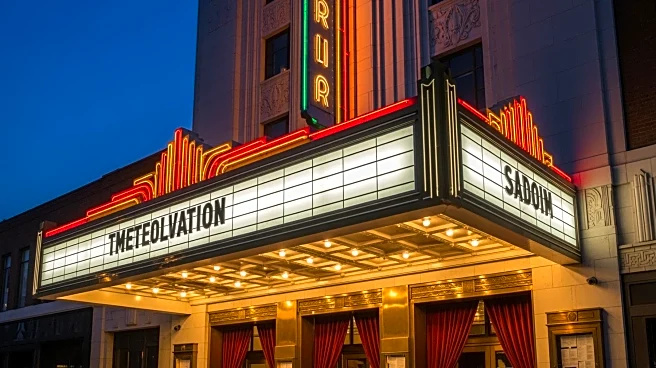


The Hayes Theater, located in the heart of Manhattan's Theater District, has a rich history that reflects the changing landscape of Broadway. Originally constructed in 1912, this theater has undergone numerous transformations, both in name and structure, to become the venue it is today. From its beginnings as the Little Theatre to its current status as the Hayes Theater, operated by Second Stage Theater, the venue has played a significant role in the evolution
of Broadway.
Early Beginnings and Initial Challenges
The Hayes Theater was originally known as the Little Theatre, a name that reflected its modest size and intimate setting. Designed by Ingalls & Hoffman for impresario Winthrop Ames, the theater was built in a neo-Georgian style and opened in 1912. Ames intended for the Little Theatre to host new plays, but its small capacity of 299 seats made it difficult to turn a profit. Despite this, the theater quickly became known for its high-quality productions, including John Galsworthy's "The Pigeon," which was the opening play.
In its early years, the Little Theatre faced financial challenges due to its limited seating. Ames attempted to address this by expanding the theater in 1920, adding a balcony to increase its capacity. This renovation was designed by Herbert J. Krapp, who retained much of the original charm while making the theater more viable. Despite these efforts, the theater continued to struggle financially, leading Ames to lease it to other producers, including Oliver Morosco and John Golden.
Mid-Century Changes and Broadcasting Era
The 1930s and 1940s brought significant changes to the theater. In 1931, the New York Times Company purchased the theater with plans to demolish it, but the venue continued to host productions until 1941. During World War II, the theater was converted into a conference hall known as the New York Times Hall, where it hosted various events, including speeches and concerts.
In the 1950s, the theater entered a new phase as a broadcasting studio for ABC. This period saw the theater being used for both radio and television broadcasts, including popular shows like "The Frances Langford–Don Ameche Show" and "The Dick Clark Show." The theater's role as a broadcasting venue continued until the early 1960s, when it returned to hosting live theater productions.
Revival and Modern Era
The late 20th century marked a revival for the theater. In 1979, Martin Markinson and Donald Tick purchased the theater, and it was renamed the Helen Hayes Theatre in 1983, honoring the legendary actress. This period saw the theater hosting successful productions like Harvey Fierstein's "Torch Song Trilogy," which ran for three years.
In 2015, Second Stage Theater acquired the venue, marking a new chapter in its history. After extensive renovations, the theater reopened in 2018 as the Hayes Theater, with a focus on presenting works by living American playwrights. This transition has allowed the theater to continue its legacy as a vital part of Broadway, showcasing innovative and diverse productions.
The Hayes Theater's journey from a small playhouse to a prominent Broadway venue reflects the dynamic nature of the theater industry. Its ability to adapt and reinvent itself over the years is a testament to its enduring significance in the world of performing arts.