

2018 AG37, also known as "FarFarOut," is a fascinating celestial body that has captured the attention of astronomers due to its extreme distance from the Sun. As a trans-Neptunian object, it offers a unique opportunity to study the outer reaches of our Solar System. This article explores the orbital dynamics and physical characteristics of 2018 AG37, shedding light on what makes this object so intriguing.
Orbital Dynamics
The orbit of 2018 AG37 is one of its most intriguing
aspects. It was discovered when it was near its aphelion, the farthest point from the Sun in its elliptical orbit. The object is estimated to be at least 132.2 astronomical units (AU) from the Sun, making it the farthest known object in the Solar System at the time of its discovery.
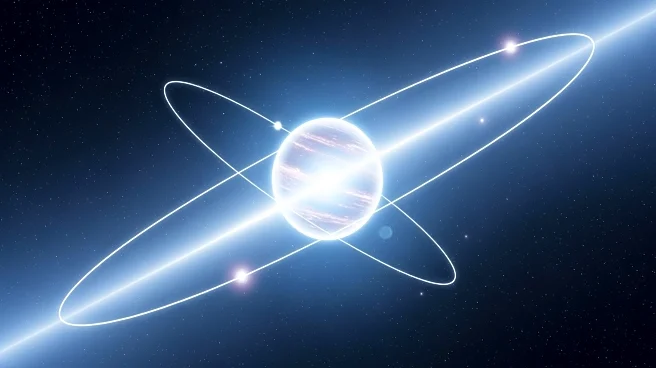
The nominal orbit of 2018 AG37 is highly uncertain, with a condition code of 9, indicating significant uncertainty. Its semi-major axis is approximately 80.2 AU, with an eccentricity of 0.655. This suggests a highly elongated orbit, with a perihelion distance of about 27.6 AU and an aphelion distance of approximately 133 AU. The orbital period is estimated to be around 718 years, although this is also uncertain due to the limited observation arc.
Physical Characteristics
In addition to its orbital dynamics, the physical characteristics of 2018 AG37 are of great interest. The object is estimated to be at least 400 kilometers in diameter, based on its apparent brightness and distance. Its apparent magnitude is 25, making it extremely faint and only visible to the largest telescopes in the world.
The surface of 2018 AG37 is believed to be highly reflective and ice-rich, contributing to its brightness despite its great distance from the Sun. This reflectivity suggests that the object may have a surface composition similar to other icy bodies in the outer Solar System.
Future Observations
The study of 2018 AG37 is ongoing, with astronomers continuing to observe the object to refine its orbital parameters and understand its physical properties better. Future observations will be crucial in reducing the uncertainties in its orbit and providing more detailed insights into its composition and behavior.
As one of the most distant known objects in the Solar System, 2018 AG37 serves as a valuable target for studying the dynamics and characteristics of trans-Neptunian objects. Its continued observation will help astronomers piece together the puzzle of our Solar System's outermost regions, offering a glimpse into the processes that govern these distant celestial bodies.