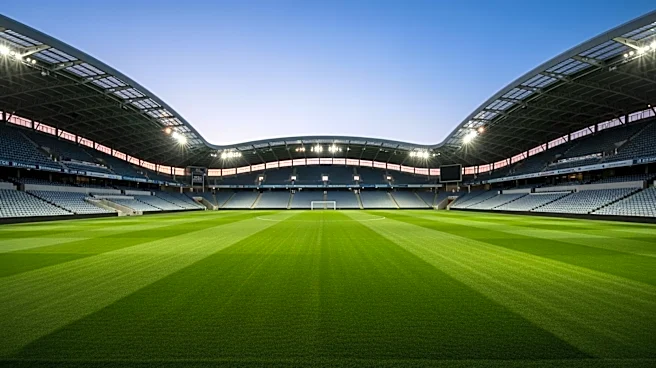

Eyravallen, now known as Behrn Arena, has been a significant part of Swedish football history since its inception. Located in Örebro, Sweden, this stadium has witnessed numerous transformations and events
that have shaped its current identity. From its early days in 1923 to its modern-day status, Eyravallen has evolved to meet the changing needs of sports and its community.
The Early Years
Eyravallen was built in 1923, marking the beginning of its journey as a central hub for football in Örebro. Initially, it served as the home stadium for Örebro SK, a prominent football club in Sweden. The stadium's capacity was designed to accommodate 12,645 spectators, a significant number for its time. Over the years, Eyravallen became a beloved venue for local football matches, drawing in fans from across the region.
In its early years, Eyravallen was known for its natural grass surface, which was typical for football stadiums of that era. However, the harsh winters in Örebro posed challenges for maintaining the grass, leading to considerations for future renovations. Despite these challenges, Eyravallen remained a popular venue, hosting numerous matches and events that contributed to its growing reputation.
Renovations and Modernization
The need for modernization became apparent as the years went by, and Eyravallen underwent significant renovations between 2003 and 2009. One of the most notable changes was the installation of artificial turf in 2003, making Örebro SK the first top-flight club in Sweden to adopt this playing surface. This change was driven by the need to address the challenges posed by Örebro's harsh winters, ensuring that the stadium could be used year-round.
The renovations also included the construction of new stands to enhance the spectator experience. The North Stand, built in 2003, added 4,000 seats and a gondola stand with 250 seats, all under a roof. The South Stand, built in 1974, provided 3,000 seats, while the West Stand, completed in 2007, accommodated 4,350 standing spectators. The East Stand, finished in 2009, offered a mix of standing and seating options, further increasing the stadium's capacity and versatility.
A New Identity: Behrn Arena
In 2005, Eyravallen was renamed Behrn Arena due to sponsorship reasons, marking a new chapter in its history. This change reflected the stadium's modernized facilities and its continued importance as a sports venue in Sweden. Behrn Arena is not only home to Örebro SK but also hosts other sports teams, including KIF Örebro and the American football club Örebro Black Knights.
The stadium's record attendance was set in 1961, with 20,066 spectators watching a match against local rivals Degerfors IF. In the modern era, the record stands at 12,523, achieved during a game against Hammarby IF in 2018. These milestones highlight Behrn Arena's enduring appeal and its role as a key venue for sports and entertainment in Örebro.
Today, Behrn Arena stands as a testament to the evolution of sports venues, blending historical significance with modern amenities. Its journey from Eyravallen to Behrn Arena reflects the dynamic nature of sports infrastructure and its ability to adapt to changing times and needs.