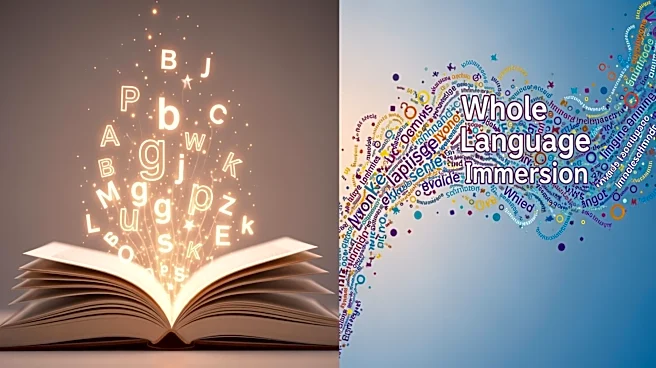








The debate between phonics and whole language approaches in reading instruction has been a longstanding one, with educators and researchers divided on the most effective method for teaching reading. Each approach has its proponents and critics, and the discussion continues to shape reading education today. This article delves into the key arguments and perspectives in this ongoing debate.
The Case for Phonics
Phonics instruction focuses on teaching the relationship between
letters and sounds, enabling students to decode words by sounding them out. Proponents of phonics argue that this method provides a solid foundation for reading, particularly for young learners. The National Reading Panel's 2000 report highlighted the effectiveness of systematic phonics instruction, leading to its widespread adoption in reading curricula.
Supporters of phonics emphasize its role in developing essential reading skills, such as decoding and word recognition. They argue that phonics instruction helps students become independent readers by equipping them with the tools to tackle unfamiliar words. However, critics of phonics point out that an overemphasis on decoding can detract from comprehension and engagement with texts.
The Whole Language Perspective
In contrast, the whole language approach emphasizes the importance of context and meaning in reading instruction. This philosophy encourages students to derive understanding from entire texts, rather than focusing solely on individual sounds. Whole language gained popularity in the 1980s and 1990s, with advocates arguing that it mirrors the natural process of language acquisition.
Critics of whole language, however, argue that it lacks the structured approach needed to develop strong reading skills. They contend that without explicit phonics instruction, students may struggle with decoding and spelling. Despite these criticisms, whole language remains an influential approach in reading education, particularly in its emphasis on comprehension and engagement.
Finding a Middle Ground
In recent years, educators have sought to bridge the gap between phonics and whole language through the balanced literacy approach. This method aims to combine the strengths of both approaches, providing students with a comprehensive reading education. Balanced literacy incorporates phonics instruction while also emphasizing the importance of comprehension and engagement with texts.
The debate between phonics and whole language highlights the complexity of reading instruction. While each approach has its merits, the most effective method may lie in a combination of strategies that address the diverse needs of learners. As educators continue to explore new research and methodologies, the goal remains to provide students with the skills and confidence to become proficient readers.