
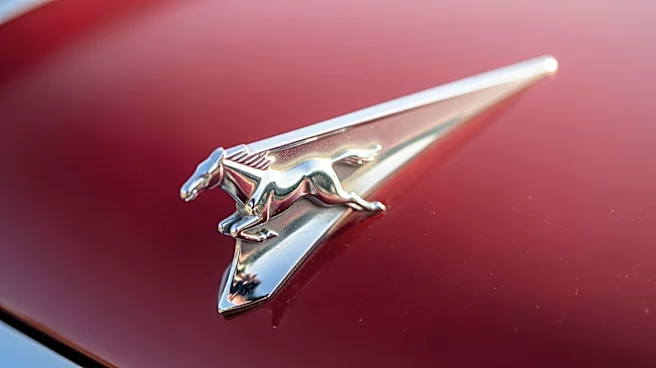


The Ford Mustang is an iconic American sports car that has captured the hearts of car enthusiasts since its debut in 1964. Over the years, the Mustang has undergone significant transformations, adapting to changing consumer preferences and technological advancements. This article explores the historical development of the Mustang, highlighting key changes and milestones across its generations.
The Birth of a Legend: First Generation (1965-1973)
The Mustang was first introduced in 1964, marking the beginning
of the pony car era. Designed as a sporty coupe with a long hood and short deck, it quickly became a symbol of American automotive innovation. The first generation Mustang was built on the platform of the Ford Falcon, offering a compact yet powerful vehicle that appealed to a wide audience.
Throughout its first generation, the Mustang saw several updates, including the introduction of the fastback model in 1965. The car's design evolved to accommodate larger engines, such as the big-block V8, enhancing its performance capabilities. By the end of the first generation in 1973, the Mustang had grown in size and power, setting the stage for future iterations.
Adapting to Change: Second and Third Generations (1974-1993)
The second generation Mustang, known as the Mustang II, was introduced in 1974 amidst the oil crisis. This model was smaller and more fuel-efficient, reflecting the changing priorities of consumers. Despite its reduced size, the Mustang II maintained the sporty appeal that had made the original so popular.
In 1979, the third generation Mustang debuted, built on the larger Fox platform. This generation saw the return of the convertible model and introduced new performance variants like the Mustang GT and the high-performance SVO. The third generation Mustang continued to evolve, with significant updates in 1987 that included a more aerodynamic design.
Modern Innovations: Fourth to Seventh Generations (1994-Present)
The fourth generation Mustang, launched in 1994, marked a return to the car's roots with a design inspired by the original model. This generation introduced the modular V8 engine, offering improved performance and efficiency. The Mustang continued to evolve through its fifth and sixth generations, incorporating modern technology and design elements.
The seventh generation Mustang, introduced in 2023, represents the latest chapter in the car's storied history. With advanced engine options and a focus on performance, the Mustang continues to be a leader in the sports car market. As the Mustang evolves, it remains a testament to Ford's commitment to innovation and excellence in automotive design.