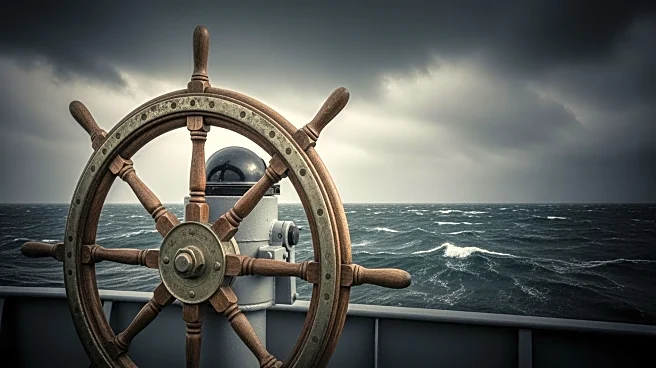



The Caine Mutiny, a novel by Herman Wouk, delves into the complex moral and ethical decisions faced by naval officers during World War II. Set aboard the USS Caine, a destroyer-minesweeper, the story unfolds through the eyes of Willis Seward "Willie" Keith, a young Princeton graduate who joins the Navy to avoid being drafted into the Army. The novel explores the challenges of leadership, the burden of command, and the fine line between duty and personal
integrity.
The Setting: A Ship in Disarray
The USS Caine, an obsolete warship, serves as the backdrop for the unfolding drama. Upon joining the crew, Willie Keith is immediately struck by the ship's decaying condition and the lack of discipline among its crew. The ship's longtime captain, Lieutenant Commander William De Vriess, is seen as too lenient, allowing the crew to become slovenly and undisciplined. This sets the stage for the arrival of Lieutenant Commander Philip Francis Queeg, a by-the-book officer who is expected to restore order.
Queeg's arrival brings a new set of challenges. Although initially seen as a strong leader, Queeg's inexperience with the ship and his tendency to blame others for his mistakes soon erode the crew's confidence in him. His actions, such as browbeating officers into selling their liquor rations and smuggling it off the ship, further undermine his authority. The crew's growing disillusionment with Queeg's leadership becomes a central theme in the novel.
The Mutiny: A Legalistic Rebellion
The titular mutiny is not a violent uprising but a legalistic challenge to Queeg's command. During Typhoon Cobra, Queeg's inability to make decisive decisions leads Lieutenant Stephen Maryk to relieve him of command, believing it necessary to save the ship. This act of mutiny results in a court-martial, which serves as the dramatic climax of the novel.
The court-martial raises questions about the nature of leadership and the responsibilities of those in command. Maryk's defense hinges on the argument that Queeg's erratic behavior and paranoia justified his removal. The trial becomes a battle of wits, with Lieutenant Barney Greenwald, Maryk's defense attorney, exposing Queeg's instability under cross-examination.
The Aftermath: Reflections on Leadership
The novel concludes with reflections on the nature of leadership and the consequences of the mutiny. Maryk's acquittal and the dropping of charges against Keith and Stilwell highlight the complexities of command and the fine line between duty and personal integrity. Greenwald's drunken speech at the celebration party underscores the novel's central theme: the importance of supporting those in command, even when they falter.
The Caine Mutiny remains a powerful exploration of the moral and ethical challenges faced by naval officers during wartime. Through its vivid characters and gripping narrative, the novel offers a timeless reflection on the burdens of leadership and the complexities of human nature.