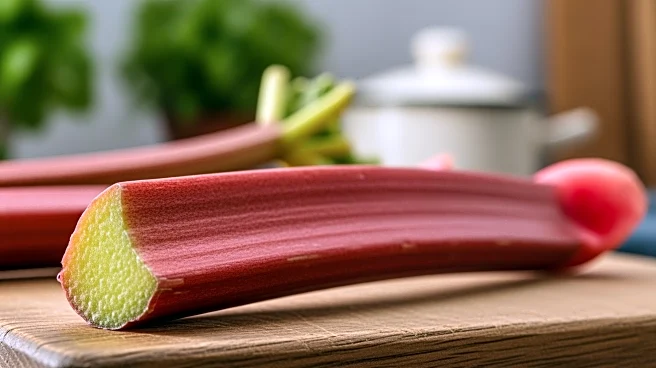




Rhubarb, a plant with a rich history, has found its way into kitchens around the world, primarily for its edible stalks. Although it is botanically a vegetable, rhubarb is often treated as a fruit in culinary contexts. This unique plant has a tart flavor that has been embraced in various dishes, particularly desserts. The journey of rhubarb from a medicinal plant to a culinary staple is a fascinating tale of adaptation and innovation.
Rhubarb's Introduction to the Kitchen
Rhubarb's use
as a food ingredient is a relatively recent development. It was first recorded in 18th- to 19th-century England, coinciding with the increased availability of affordable sugar. This allowed the tart stalks of rhubarb to be sweetened and used in desserts. Before this culinary transformation, rhubarb was primarily known for its medicinal properties, particularly in the Islamic world since the 10th century.
In England and Scandinavia, rhubarb began to be cultivated as a vegetable crop. The plant's ability to hybridize easily led to the development of culinary rhubarb, which varies in appearance between different species. The Royal Horticultural Society recognizes many cultivars, most of which are classified as Rheum × hybridum.
Popular Rhubarb Dishes
Rhubarb is most commonly used in desserts, where its tartness is balanced with sugar. It is often stewed and used in pies, crumbles, and tarts. In the United States, rhubarb is frequently paired with strawberries to create the popular strawberry-rhubarb pie. This combination is celebrated for its perfect balance of sweet and tart flavors.
In Northern Europe and North America, rhubarb compote is a common preparation. The stalks are cut into pieces and stewed with sugar until soft, sometimes thickened with corn starch. This compote can be used in various desserts or made into jams with the addition of pectin. Spices like ginger, cinnamon, and nutmeg are often added to enhance the flavor.
Rhubarb's Versatility in the Kitchen
Beyond desserts, rhubarb can be used in savory dishes and pickled preparations. It can be dehydrated and infused with fruit juice, a method popular in the United States where it is often infused with strawberry juice. Rhubarb's versatility extends to beverages as well, with its use in fruit wines and Finnish rhubarb sima.
Despite its tartness, rhubarb has carved out a niche in the culinary world. Its unique flavor profile and adaptability make it a cherished ingredient in both traditional and modern recipes. As a vegetable that masquerades as a fruit, rhubarb continues to surprise and delight chefs and home cooks alike.