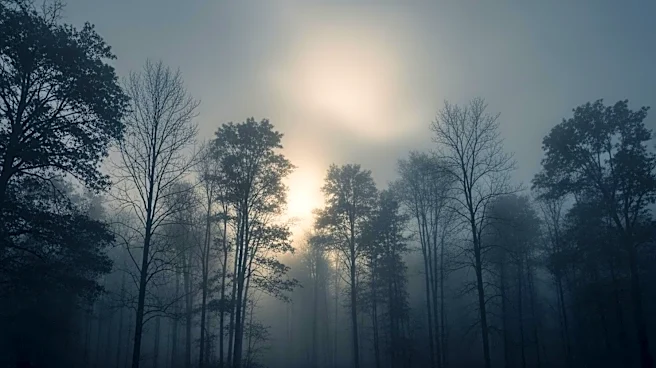



On May 19, 1780, the residents of New England and parts of eastern Canada experienced an extraordinary event known as New England's Dark Day. This day was marked by an unusual darkening of the daytime sky, which required candles to be lit from noon onwards. The event was caused by a combination of smoke from forest fires, thick fog, and cloud cover, and it lasted until the middle of the next night. This article explores the historical context and reactions
to this mysterious phenomenon.
The Historical Context
The Dark Day occurred during a period of significant change and uncertainty in the American colonies. The Revolutionary War was ongoing, and the colonies were grappling with issues of governance and independence. The sudden and unexplained darkness added to the sense of uncertainty and fear among the people.
The event was noted by several contemporary observers, including Professor Samuel Williams of Harvard College, who reported that the darkness extended as far north as Portland, Maine, and southwards to New Jersey. Revolutionary War soldier Joseph Plumb Martin also recorded his observations, noting the profound impact the darkness had on daily life.
Reactions to the Darkness
The darkness was met with a variety of reactions from the people of New England. Many were baffled by the event and sought explanations through religious interpretations. Some saw it as a fulfillment of biblical prophecies, while others viewed it as a sign of impending judgment.
In Connecticut, Abraham Davenport famously responded to his colleagues' fears by choosing to continue his duties, stating, "The day of judgment is either approaching, or it is not. If it is not, there is no cause for an adjournment; if it is, I choose to be found doing my duty." This pragmatic approach was commemorated in the poem "Abraham Davenport" by John Greenleaf Whittier.
The Legacy of the Dark Day
The Dark Day left a lasting impression on the people of New England and has been the subject of various interpretations and discussions over the years. It served as a catalyst for religious and philosophical debates, with figures like the Public Universal Friend and Ann Lee using the event to present their religious testimonies.
The event also highlighted the vulnerability of human societies to natural phenomena and the ways in which people interpret and respond to such occurrences. Today, New England's Dark Day is remembered as a unique and intriguing episode in the region's history, offering insights into the interplay between nature and human perception.