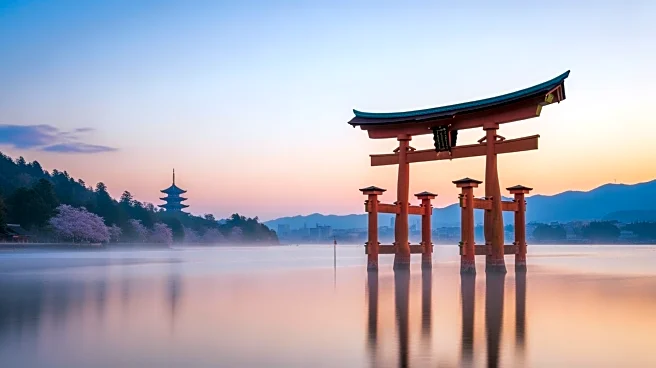

Japan's tourism industry has a rich history that dates back to medieval times. Over the centuries, the country has evolved from a land of isolated travel to a bustling international tourist destination.
This article explores the historical development of tourism in Japan, highlighting key milestones and transformations.
Medieval Beginnings and Travel Literature
In medieval Japan, travel was primarily undertaken by cultural and aristocratic figures from Kyoto. This period saw the emergence of travel literature, with notable works such as the Tosa Nikki and the Sarashina Nikki. These writings not only documented journeys but also inspired others to explore the country.
By the late medieval period, a network of inns offering fixed-rate lodging and meals facilitated widespread travel. Hot springs like Kusatsu and Arima became popular destinations, attracting warriors and monks. Pilgrimages to Mount Fuji also gained popularity, marking the beginnings of a tourism culture in Japan.
Edo Period and the Rise of Domestic Tourism
During the Edo period, despite restrictions on travel, guidebooks helped popularize leisure trips. Commoners with permits often disguised their journeys as pilgrimages. Inns, teahouses, and local products thrived, and travel information spread through diaries and ukiyo-e prints.
The Ise Grand Shrine's Okage Mairi pilgrimage became a major social phenomenon, laying the groundwork for a modern tourism industry. However, foreign travel was rare due to Japan's isolation policy, and the country remained closed to international tourists.
Meiji Era and the Opening to International Tourism
Japan's borders opened in the late Edo period, but foreign visitors were initially few due to the country's remote location. Efforts to attract international tourists began with the establishment of the Japan Travel Bureau in 1912 and the passage of the Hotel Development Law in 1907.
The interwar period saw limited overseas travel, primarily for business and education. However, domestic tourism flourished with the development of transport networks and the dismantling of the feudal system. Regions across Japan began developing for sightseeing and leisure, making long-distance domestic travel more accessible.
In conclusion, Japan's tourism industry has undergone significant transformations from its medieval beginnings to the present day. The country's rich history and cultural heritage continue to attract visitors from around the world, making tourism a vital part of Japan's economy and cultural identity.