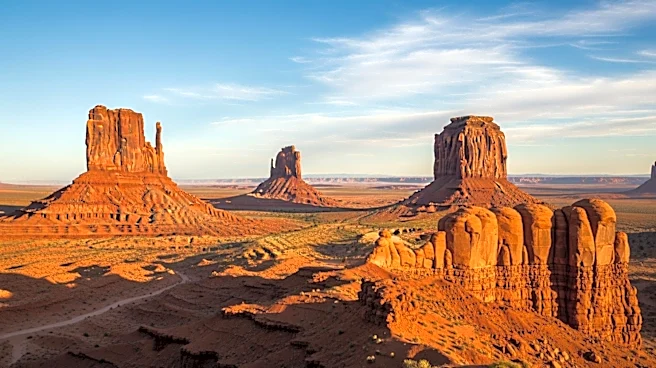







Monument Valley, a stunning natural landmark located on the Arizona-Utah border, is renowned for its breathtaking sandstone buttes. This region, part of the Colorado Plateau, is not only a visual spectacle but also holds significant cultural importance for the Navajo people. The valley's unique geological formations and vibrant colors make it a fascinating subject for exploration.
The Iconic Sandstone Buttes
Monument Valley is characterized by its towering sandstone buttes, some
of which rise as high as 1,000 feet above the valley floor. These formations are primarily composed of siltstone from the Cutler Group, with their vivid red hues resulting from iron oxide. The darker, blue-gray rocks owe their color to manganese oxide. The buttes are stratified into three main layers: the Organ Rock Shale at the base, de Chelly Sandstone in the middle, and the Moenkopi Formation topped by Shinarump Conglomerate.
The most famous formations include the West and East Mitten Buttes, Merrick Butte, and the Totem Pole, a highly eroded remnant of a butte. These structures are not only geological wonders but also serve as cultural symbols for the Navajo Nation, who consider the valley sacred.
The Formation of Monument Valley
The landscape of Monument Valley was shaped over millions of years through a combination of geological processes. Initially, the region was a lowland basin where layers of sediment were deposited by ancient rivers. Over time, these sediments solidified into rock, forming the basis of the valley's current geological structure.
The uplift of the Colorado Plateau, which began around 70 million years ago, played a crucial role in the valley's formation. This uplift exposed the sedimentary layers to erosion by wind and water, gradually sculpting the dramatic buttes and mesas we see today. The process of erosion continues to shape the landscape, ensuring that Monument Valley remains a dynamic and ever-changing natural wonder.
Access and Exploration
Visitors to Monument Valley can access the area via U.S. Route 163, which offers stunning views of the valley's iconic formations. The valley is part of the Navajo Nation, and visitors are encouraged to explore the area with Navajo guides who can provide insights into the cultural and historical significance of the land.
Guided tours offer access to areas of the valley that are otherwise restricted, allowing visitors to experience the full majesty of this unique landscape. Whether viewed from a distance or explored up close, Monument Valley's geographical features continue to captivate and inspire all who visit.