





The Newbery Medal, established in 1922, is a prestigious award given annually by the American Library Association (ALA) to honor the most distinguished contribution to American literature for children. Named after John Newbery, an 18th-century English publisher, the award has evolved significantly over the years, reflecting changes in the literary landscape and the values of the ALA. This article delves into the historical development of the Newbery Medal, highlighting
key milestones and changes in its administration.
The Birth of the Newbery Medal
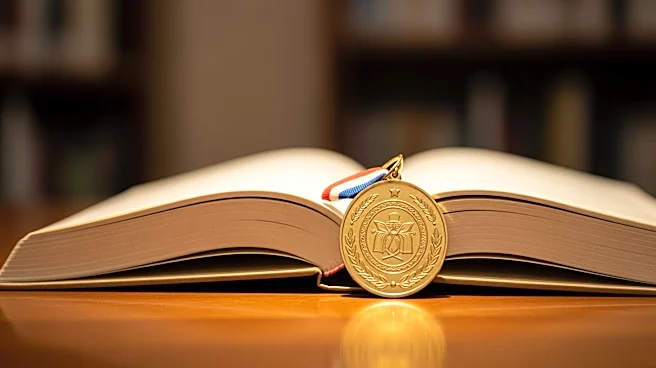
The idea for the Newbery Medal was first proposed by Frederic G. Melcher in 1921. Melcher, an editor at Publishers Weekly, envisioned an award that would encourage quality and creativity in children's literature. The proposal was well received by children's librarians and was approved by the ALA Executive Board. The first award was given in 1922, making it the first children's book award in the world. The physical medal, designed by Rene Paul Chambellan, features an author presenting a book to a boy and a girl, symbolizing the award's focus on children's literature.
Initially, the selection process involved a jury of Children's Librarian Section officers who voted on nominated books. However, in 1924, the process was revised to form a special award committee responsible for selecting the winner. This committee has undergone several changes over the years, reflecting the evolving nature of the award and its administration.
Changes and Developments Over the Years
Throughout its history, the Newbery Medal has seen numerous changes in its rules and administration. In 1932, a rule was introduced to encourage new writers, stipulating that an author could win a second Newbery only if the vote was unanimous. This rule remained in place until 1958. In 1963, joint authors became eligible for the award, further expanding the scope of the medal.
Significant changes occurred in the 1970s and 1980s, including the introduction of the term "Newbery Honor" in 1971. Previously known as runners-up, these books were retroactively named Newbery Honor Books. The composition of the selection committee has also evolved, with the current committee consisting of fifteen members, including librarians, teachers, and book reviewers.
The Medal's Impact on Children's Literature
The Newbery Medal has had a profound impact on children's literature, elevating the status of children's books and their authors. Winning books are often widely recognized and carried by bookstores and libraries, and authors frequently gain media attention. The award has inspired master's theses and doctoral dissertations, highlighting its significance in the literary world.
Despite its success, the Newbery Medal has faced criticism for selecting books that are perceived as too difficult for children. However, the ALA maintains that the award is based on literary quality rather than popularity. The Newbery Medal continues to be a symbol of excellence in children's literature, encouraging authors to create works that enrich the lives of young readers.