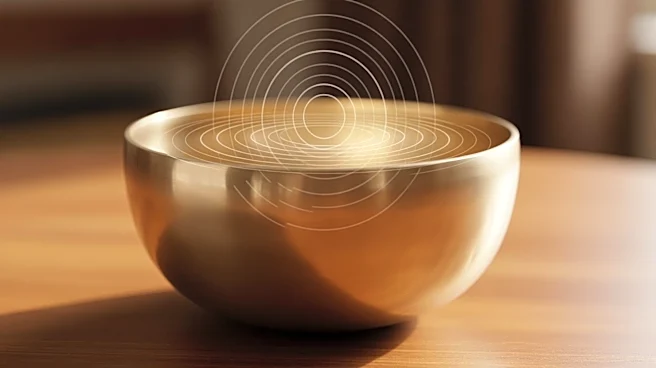








Singing bowls are not only valued for their cultural and spiritual significance but also for their unique acoustic properties. These musical instruments produce a sustained note when a mallet is rotated around their rim, creating vibrations that are both audible and tactile. This article explores the scientific principles behind singing bowls, focusing on their vibrational behavior and the factors that influence their sound.
Vibrational Behavior and Acoustic Properties
The sound of a singing
bowl is produced through a process known as friction-induced vibration. When a mallet is rotated around the rim of the bowl, it excites continuous vibrations in the metal, creating a sustained musical note. This process is similar to the slip-stick mechanism found in water-tuned musical glasses, where the friction between the mallet and the bowl causes the metal to vibrate.
Research has shown that the vibrational behavior of singing bowls involves both radial and tangential motion, resulting in a complex interplay of stable and unstable modes. These modes contribute to the unique sound of the bowls, with the unstable mode rotating around the bowl at the same angular velocity as the mallet. This creates a beating phenomenon, which is always heard, even with a perfectly symmetrical bowl.
Factors Influencing Sound Quality
Several factors influence the sound quality of a singing bowl, including its size, shape, and material composition. Most singing bowls are made of bell metal, an alloy of copper and tin, which is known for its excellent acoustic properties. The thickness of the bowl's rim and the presence of impurities or additional metals can also affect the sound, contributing to the variety of tones produced by different bowls.
The technique used to play the bowl also plays a significant role in determining the sound quality. The speed and force applied by the mallet can influence the volume and pitch of the note, while the angle at which the mallet is held can affect the clarity and resonance of the sound. Additionally, some bowls are designed to be played with water, allowing them to be tuned to specific pitches and creating unique visual effects as the water vibrates.
Applications in Sound Therapy
The scientific principles behind singing bowls have made them a popular tool in sound therapy, where their vibrations are used to promote relaxation and healing. The sound of the bowls is believed to work on the body's energy centers, or chakras, aligning and balancing them to improve physical and emotional well-being.
In sound therapy sessions, singing bowls are often used in conjunction with other instruments, such as gongs and chimes, to create a harmonious and meditative soundscape. The vibrations produced by the bowls are thought to help calm the mind and body, reducing stress and promoting a sense of inner peace.
The scientific exploration of singing bowls continues to uncover new insights into their acoustic properties and therapeutic potential. As research progresses, the understanding of these unique instruments is likely to deepen, further enhancing their role in modern wellness practices.