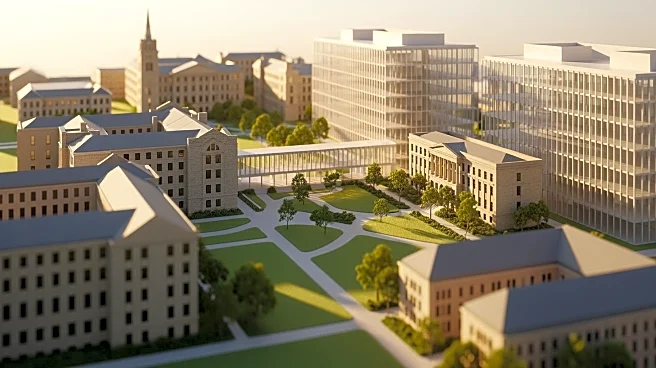




San Diego State University (SDSU) has a rich history that spans over a century, evolving from a small normal school to a major public research university. Founded in 1897, SDSU has undergone numerous transformations, reflecting changes in educational needs and societal expectations. This article explores the key milestones in SDSU's development, highlighting its growth, challenges, and achievements.
Early Beginnings and Growth
San Diego State University began as the San Diego Normal
School, established on March 13, 1897, to train teachers for the growing population of San Diego. The school opened its doors on November 1, 1898, with 135 students, primarily women, and offered courses in English, history, and mathematics. The initial campus was located in University Heights, a site that would later become the headquarters of the San Diego Unified School District.
By 1921, the institution had evolved into San Diego State Teachers College, a four-year public institution capable of granting degrees. This change marked a significant shift in the school's mission, expanding its curriculum beyond teacher training to include a broader liberal arts education. The college's growth necessitated a move to a larger campus, and in 1931, SDSU relocated to Montezuma Mesa, its current location.
The Great Depression brought challenges but also opportunities for expansion. Federal government programs funded the construction of new buildings, including a stadium and an open-air theater, which helped establish SDSU as a prominent educational institution in California. By the end of the 1950s, the student population had grown to 10,000, making SDSU the fourth largest California state institution.
Transition to University Status
The 1960s and 1970s were transformative decades for SDSU. The campus saw increased enrollment, accreditation of its professional schools, and incidents of student activism reflecting the era's social changes. On January 1, 1974, the institution was officially renamed San Diego State University, signifying its expanded role in higher education.
During this period, SDSU continued to grow in size and reputation. By 1987, the university's population peaked at nearly 36,000 students, making it the largest university in California and tenth in the nation. SDSU's academic offerings expanded, and the university began to focus more on research, establishing itself as a significant player in the academic community.
The university faced challenges, including a school shooting and a large drug bust, but continued to thrive. SDSU developed construction plans to replace older buildings and infrastructure, ensuring that the campus could accommodate its growing student body and academic programs.
Modern Developments and Achievements
In recent years, SDSU has continued to enhance its academic rankings and expand its research capabilities. The university is classified among "R1: Doctoral Universities – Very high research activity," reflecting its commitment to research and innovation. SDSU is also recognized as a Hispanic-Serving Institution and an Asian American and Native American Pacific Islander-Serving Institution, highlighting its diverse student body.
SDSU's athletic teams, known as the Aztecs, compete in NCAA Division I, primarily as a member of the Mountain West Conference. The Aztecs have achieved success in various sports, including football and basketball, and have won 14 Olympic medals.
The university's impact extends beyond academics and athletics. A 2007 study revealed that SDSU has an economic impact of $2.4 billion on the San Diego region, with projections indicating that this could increase to $4.5 billion by 2025. SDSU's commitment to community engagement and economic development is evident in its various initiatives and partnerships.
As SDSU looks to the future, it continues to build on its legacy of excellence in education, research, and community service. The university's journey from a small normal school to a leading research institution is a testament to its adaptability and resilience in the face of changing educational landscapes.