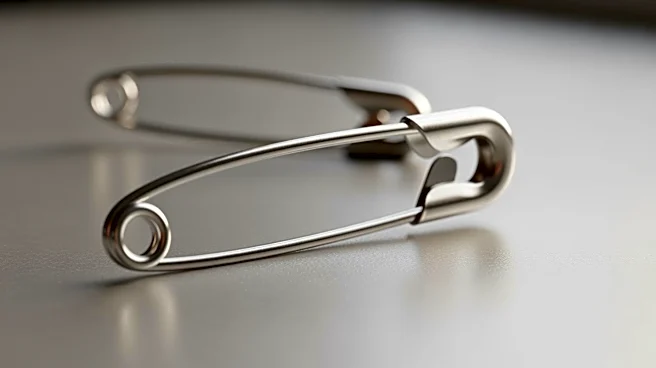







The safety pin is a small yet significant invention that has found its way into everyday life across the globe. Invented by Walter Hunt in 1849, the safety pin was designed to address a practical need while also providing a safer alternative to the regular pin. This article delves into the invention of the safety pin, its design features, and its cultural impact over the years.
The Birth of the Safety Pin
Walter Hunt, an American mechanic, invented the modern safety pin in 1849.
Hunt's design included a clasp that covered the sharp point, preventing it from opening accidentally and causing injury. The safety pin also featured a circular twist at the bend, which acted as a spring to hold the pin in place securely. Hunt's motivation for creating the safety pin was to pay off a $15 debt to a friend. He used a piece of brass wire about eight inches long and devised a coil in the center to allow the pin to open when released.
After receiving U.S. patent #6,281 on April 10, 1849, Hunt sold the patent to W.R. Grace and Company for $400. This transaction allowed Hunt to settle his debt and keep the remaining $385. Despite the modest sum Hunt received, W.R. Grace and Company went on to make millions from the safety pin, highlighting the invention's commercial success.
Design and Functionality
The safety pin's design is simple yet effective. It consists of a sharpened pin attached to a coiled wire, connected with a cap hooked at the end of the wire. When the pin is pushed into the opening of the cap, it secures the safety of the pin, and the clasp is closed. This mechanism ensures that the sharp point is covered, reducing the risk of injury.
Safety pins are commonly used to fasten pieces of fabric or clothing together. They are particularly favored for securing cloth diapers, as their safety clasp prevents babies from being jabbed or pricked. Additionally, safety pins are used to patch torn clothing and serve as accessories in jewelry, such as earrings and wristbands.
Cultural and Symbolic Significance
Beyond their practical use, safety pins have gained cultural significance over the years. During the punk rock movement in the late 1970s, safety pins became associated with the genre and its followers. Punk fans incorporated safety pins into their clothing as decoration or piercings, shifting their purpose from practicality to fashion.
In recent years, safety pins have also become symbols of solidarity. After the Brexit referendum in the United Kingdom in 2016, safety pins worn visibly on clothing represented support for victims of racist and xenophobic speech and violence. This symbol spread to the United States following Donald Trump's election to the presidency, demonstrating the safety pin's evolving role in social and political contexts.