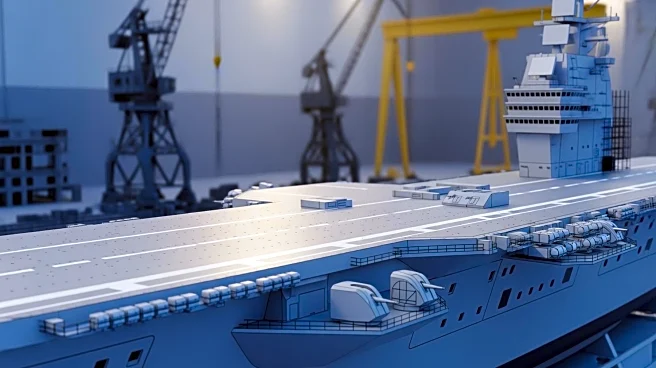



The USS Ranger (CV-4) was a groundbreaking vessel in the history of the United States Navy, being the first aircraft carrier designed and built as such from the outset. This article delves into the construction, refit, and modernization efforts that shaped the Ranger throughout its service life, highlighting the challenges and innovations involved.
Initial Construction
Authorized by Congress in 1929, the construction of the USS Ranger began with a competitive bidding process.
Newport News Shipbuilding and Drydock Company won the contract, outbidding other major shipbuilders. The keel was laid down in 1931, and the ship was launched in 1933, with First Lady Lou Henry Hoover sponsoring the launch.
The Ranger was initially designed as a flush-deck carrier, similar to the earlier USS Langley, with no island superstructure. However, this design was modified during construction to include an island, which increased the ship's displacement to 14,500 tons. The addition of the island was a significant change, as it improved the ship's operational capabilities by providing better navigation and control facilities.
Refit and Modernization
Throughout its service, the USS Ranger underwent several refits and modernization efforts to enhance its capabilities. One of the first major changes was the consolidation of its 5-inch gun battery, which improved its defensive capabilities. The anti-aircraft armament was also upgraded, with the installation of more effective weapons systems over time.
In 1943, a significant modernization plan was proposed to address the growing size and weight of carrier aircraft. The plan included strengthening the flight deck, enlarging the aft elevator, and installing new catapults. However, due to resource constraints and the need to prioritize new carrier construction, the full modernization was postponed. Instead, the Ranger received updates to its radar equipment and flight deck, allowing it to continue serving effectively.
Legacy of Innovation
The construction and modernization of the USS Ranger set a precedent for future aircraft carriers. Its design and subsequent updates reflected the evolving needs of naval aviation and the lessons learned from early carrier operations. The Ranger's ability to adapt to new technologies and requirements demonstrated the importance of flexibility in naval design.
In conclusion, the USS Ranger (CV-4) was a pioneering vessel that played a crucial role in the development of aircraft carrier technology. Its construction and modernization efforts laid the groundwork for future advancements, ensuring that the U.S. Navy remained at the forefront of naval aviation. The Ranger's legacy continues to influence carrier design and strategy to this day.