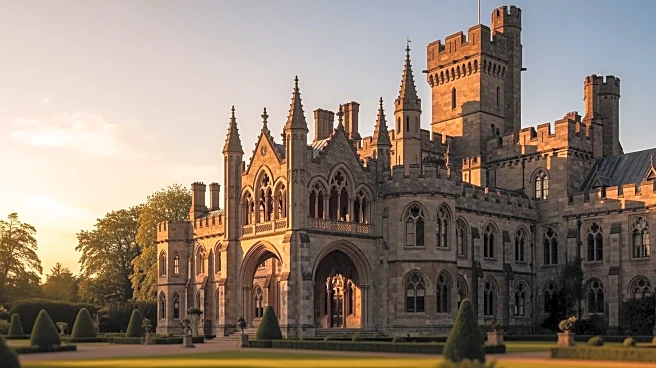

The Smithsonian Institution Building, often referred to as the Smithsonian Castle, stands as a testament to the architectural vision of the 19th century. Located on the National Mall in Washington, D.C.,
this iconic structure was designed by James Renwick Jr. and completed in 1855. Its unique Romanesque Revival style, characterized by its red sandstone construction, sets it apart from other buildings in the area. This article delves into the architectural features and historical significance of this remarkable building.
The Vision of James Renwick Jr.
James Renwick Jr., a prominent architect of his time, was the creative mind behind the Smithsonian Castle. Renwick was selected through a nationwide design competition held in 1846, where his design was chosen unanimously. Known for his work on St. Patrick's Cathedral in New York City, Renwick brought a distinct Gothic Revival style to the Castle, blending it with Romanesque elements. His design was inspired by the Norman Revival style, which combines late Romanesque and early Gothic motifs.
Renwick's original plan was to construct the building using white marble or yellow sandstone. However, the final decision was to use Seneca red sandstone from Maryland, which was more cost-effective and durable. This choice of material not only gave the Castle its distinctive color but also contributed to its longevity. The building's design includes a central section, two wings, and several towers, with the principal tower standing at 91 feet high.
Architectural Features and Style
The Smithsonian Castle is a prime example of Romanesque Revival architecture, a style that was gaining popularity in the mid-19th century. This style is characterized by its use of rounded arches, robust masonry, and intricate detailing. Renwick's design incorporated these elements, creating a structure that was both functional and aesthetically pleasing.
The building's facade features a series of towers, with the tallest reaching 145 feet. These towers not only add to the building's grandeur but also serve practical purposes, such as housing staircases and providing additional space. The Castle's interior was designed to accommodate the Smithsonian's administrative offices and museum space, with a Great Hall serving as the main entry and exhibition area.
Historical Significance and Legacy
Since its completion in 1855, the Smithsonian Castle has played a vital role in the history of the Smithsonian Institution. It was the first building constructed for the Institution and has served as its administrative headquarters ever since. Over the years, the Castle has undergone several renovations to preserve its structure and adapt to modern needs.
In 1965, the building was designated a National Historic Landmark, recognizing its architectural and historical significance. Today, it continues to be a focal point on the National Mall, attracting visitors from around the world. The Castle not only represents the architectural ingenuity of the 19th century but also stands as a symbol of the Smithsonian's commitment to education and research.