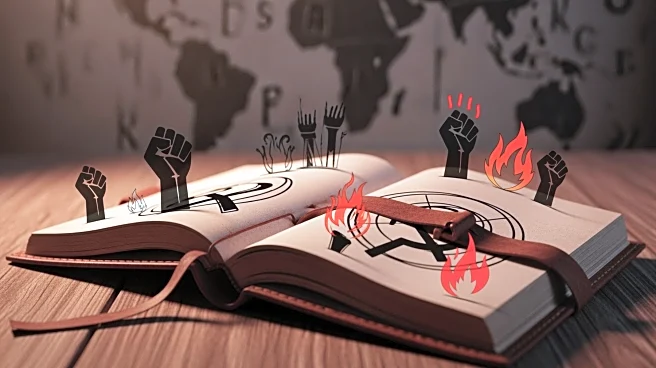




Che Guevara's legacy as a revolutionary leader extends far beyond his role in the Cuban Revolution. His ideas and actions have inspired countless revolutionary movements across the globe, making him a symbol of resistance against oppression and a champion of social justice. This article explores Che Guevara's influence on global revolutionary movements, examining how his strategies and ideology have shaped struggles for liberation worldwide.
The Spread of Guevarism
Guevara's
revolutionary ideology, often referred to as "Guevarism," is rooted in Marxist-Leninist principles and emphasizes the importance of armed struggle and guerrilla warfare. His writings, particularly his manual on guerrilla warfare, have served as a blueprint for revolutionary movements seeking to challenge oppressive regimes. Guevara's belief in the necessity of a vanguard party to lead the revolution has also influenced leftist movements around the world.
In Latin America, Guevara's ideas have been particularly influential. The Sandinistas in Nicaragua, the FARC in Colombia, and the Zapatistas in Mexico have all drawn inspiration from Guevara's revolutionary strategies. His emphasis on the role of the peasantry in the revolutionary struggle has resonated with movements seeking to address social and economic inequalities in rural areas. Guevara's vision of a united Latin America, free from imperialist influence, continues to inspire efforts toward regional solidarity and cooperation.
Global Impact and Legacy
Beyond Latin America, Guevara's influence can be seen in revolutionary movements across Africa, Asia, and the Middle East. In Africa, Guevara's involvement in the Congo and his support for liberation movements in Angola and Mozambique demonstrated his commitment to anti-colonial struggles. His efforts to export the revolution to Africa, though ultimately unsuccessful, highlighted the global reach of his revolutionary vision.
In Asia, Guevara's ideas have been embraced by various leftist movements, including the Naxalite insurgency in India and the Communist Party of the Philippines. His emphasis on guerrilla warfare and the need for a disciplined revolutionary vanguard has informed the strategies of these movements as they seek to challenge entrenched power structures. Guevara's legacy as a symbol of resistance against imperialism and oppression continues to resonate with those fighting for social justice and equality.
Controversies and Criticisms
While Guevara's influence on global revolutionary movements is undeniable, his legacy is not without controversy. Critics have pointed to his advocacy for armed struggle and his role in the execution of political opponents as evidence of a more complex and contentious figure. Some argue that Guevara's revolutionary strategies have led to prolonged conflicts and human rights abuses in regions where his ideas have been adopted.
Despite these criticisms, Guevara's impact on revolutionary movements remains significant. His life and legacy continue to inspire debates about the nature of revolution and the pursuit of social justice. Whether viewed as a hero or a villain, Che Guevara's influence on global revolutionary movements is a testament to the enduring power of his ideas and the ongoing struggle for a more equitable world.