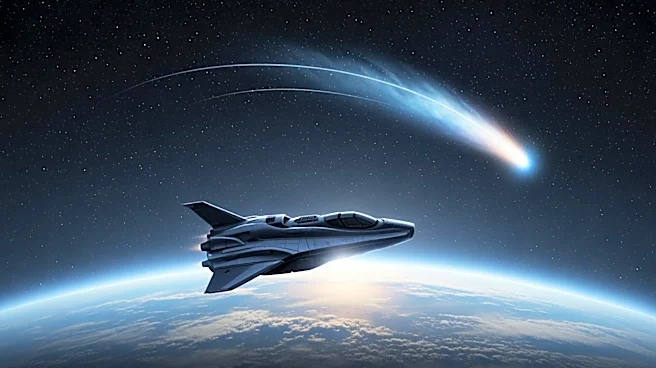

The Pioneer Venus Orbiter, launched by NASA in 1978, was not only a mission to study Venus but also played a crucial role in observing Halley's Comet. This unexpected opportunity arose in February 1986
when the comet was hidden from Earth's view. The orbiter's unique position allowed it to capture significant data about the comet, contributing to our understanding of these celestial bodies.
The Orbiter's Unique Position
The Pioneer Venus Orbiter was in a prime position to observe Halley's Comet during its 1986 appearance. While the comet was obscured from Earth, the orbiter's orbit around Venus provided a vantage point that was otherwise unavailable. This allowed the spacecraft to gather data that would have been impossible to collect from Earth-based observatories.
On February 9, 1986, the orbiter detected the loss of water from the comet's center. This observation was significant because it provided insights into the comet's composition and behavior. Understanding the loss of water and other materials from comets is crucial for scientists studying the formation and evolution of these ancient objects.
Contributions to Cometary Science
The data collected by the Pioneer Venus Orbiter during its observation of Halley's Comet added to the body of knowledge about comets. By studying the loss of water and other materials, scientists could make inferences about the processes occurring within the comet. This information helped refine models of cometary behavior and contributed to the broader understanding of the solar system's history.
The orbiter's observations were particularly valuable because they occurred during a time when Halley's Comet was not visible from Earth. This unique perspective provided by the Pioneer Venus Orbiter highlighted the importance of space-based observations in complementing ground-based studies. The mission demonstrated how spacecraft could be used to gather data from locations that are otherwise inaccessible.
Lasting Impact
The Pioneer Venus Orbiter's observation of Halley's Comet is a testament to the mission's versatility and scientific value. While its primary goal was to study Venus, the orbiter's ability to capture data on the comet showcased the potential for spacecraft to contribute to multiple areas of research.
The insights gained from the orbiter's observations continue to inform cometary science today. As researchers build on the data collected by the Pioneer Venus Orbiter, they are better equipped to understand the complex dynamics of comets and their role in the solar system. This mission remains a significant chapter in the history of space exploration, illustrating the unexpected opportunities that arise when exploring the cosmos.