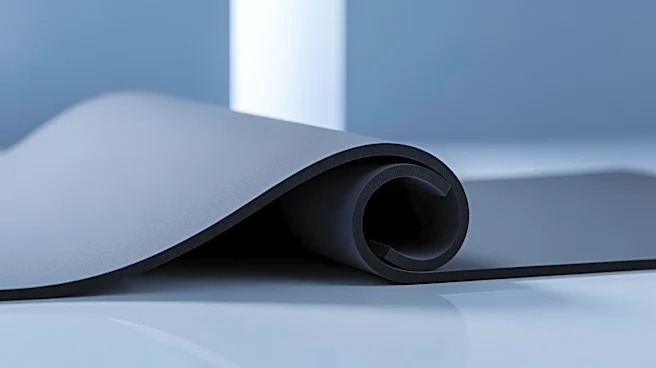

Neoprene, a synthetic rubber, has become a staple in various industries due to its durability and chemical resistance. Its journey from discovery to widespread use is a fascinating tale of scientific innovation
and commercial adaptation. This article delves into the historical development of neoprene and its diverse applications today.
The Birth of Neoprene
Neoprene was invented by DuPont scientists on April 17, 1930, following a lecture by Fr Julius Arthur Nieuwland, a professor of chemistry at the University of Notre Dame. Nieuwland's work on acetylene led to the creation of divinyl acetylene, a jelly that transformed into an elastic compound similar to rubber when exposed to sulfur dichloride. DuPont purchased the patent rights and, under the guidance of Wallace Carothers, developed neoprene commercially.
Initially marketed as DuPrene, neoprene faced challenges due to its manufacturing process, which left a foul odor. However, a new process was developed that eliminated these byproducts and reduced production costs, leading to increased demand. By 1939, neoprene sales were generating significant profits for DuPont.
Neoprene's Mechanical Properties
Neoprene's high tensile performance is attributed to its regular backbone structure, which undergoes strain crystallization under tensile loading. This property makes it suitable for demanding applications such as gaskets, hoses, and corrosion-resistant coatings. Neoprene resists degradation more than natural or synthetic rubber, making it ideal for extreme conditions.
Exposure to acetone and heat can degrade neoprene's tensile strength and elongation, likely due to a loss of plasticizers and increased crosslinking during heat exposure. Despite these challenges, neoprene remains a preferred material for applications requiring durability and chemical resistance.
Modern Applications of Neoprene
Today, neoprene is used in a wide range of products, from laptop sleeves and orthopedic braces to electrical insulation and automotive fan belts. Its foam form, produced in closed-cell or open-cell varieties, is used for thermal insulation in wetsuits and drysuits. Neoprene's buoyancy and compressibility make it a popular choice for aquatic activities.
In addition to its use in protective clothing, neoprene is found in lifestyle accessories like laptop sleeves and tablet holders. It is also used in hydroponic gardening systems to support plant growth. Neoprene's versatility and durability continue to make it a valuable material across various industries.