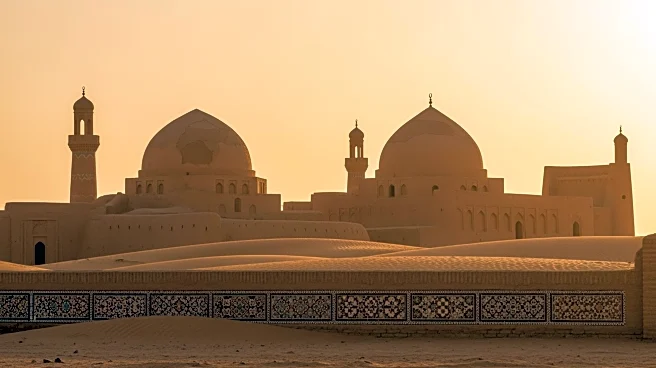




Uzbekistan is home to seven UNESCO World Heritage Sites, each offering a unique glimpse into the country's rich history and cultural heritage. These sites are significant not only for their historical value but also for their architectural beauty and cultural importance, attracting visitors from around the world.
The Historical Centers of Bukhara and Samarkand
Bukhara and Samarkand are two of Uzbekistan's most renowned UNESCO World Heritage Sites. Bukhara's historical center is filled with magnificent
examples of medieval Islamic and Central Asian architecture, including the Po-i-Kalyan Complex and the Ark citadel. The Samanid Mausoleum and Lyabi Khauz Ensemble further enrich Bukhara's cultural landscape.
Samarkand, another jewel of Uzbekistan, is famous for its Registan ensemble, a complex of three madrasahs dating from the 15th to 17th centuries. The city's historical center is a World Heritage Site, preserving cultural and architectural landmarks that are considered masterpieces of Islamic art. The necropolis of Shah-i-Zinda is a popular tourist attraction, adding to Samarkand's allure.
Khiva's Ichan Kala
Khiva's Ichan Kala, or "inner fortress," is a UNESCO World Heritage Site known for its intact inner city. The walled center of Khiva features mosques, madrasahs, minarets, walls, and gates that reflect the city's rich history. Visitors to Khiva can immerse themselves in the city's vibrant past, exploring its many monuments and learning about its role in the Silk Road trade.
The architectural heritage of Khiva offers a unique opportunity to explore the city's historical significance, with well-preserved structures providing insight into the city's past. The Ichan Kala is a remarkable example of medieval architecture, attracting visitors interested in Uzbekistan's cultural heritage.
Shakhrisabz: A Timurid Legacy
Shakhrisabz, the birthplace of Amir Timur, is another important UNESCO World Heritage Site in Uzbekistan. The city's historical center features impressive monuments from the Timurid Dynasty, offering visitors a chance to explore the city's rich history and understand its significance in the Silk Road trade.
The architectural landmarks of Shakhrisabz, including the Ak-Saray Palace and the Dorus Saodat Complex, provide a glimpse into the grandeur of the Timurid era. Shakhrisabz's historical significance is further highlighted by its inclusion in the list of anniversaries celebrating the 2750th anniversary of Samarkand, underscoring its importance in Uzbekistan's cultural heritage.