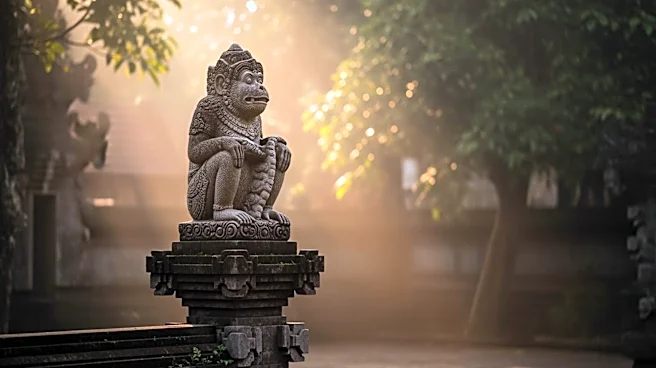







Monkeys have long held a significant place in various religious and cultural traditions across the globe. From ancient Peru to modern-day Asia, these creatures are revered and symbolized in diverse ways. This article explores the role of monkeys in religion and worship, highlighting their symbolic meanings and cultural significance.
Monkeys in Asian Religions
In Hinduism, the monkey god Hanuman is a prominent deity known for his strength, courage, and devotion. Hanuman is often
depicted as a human-like monkey who plays a crucial role in the epic Ramayana, assisting Lord Rama in his quest to rescue his wife, Sita. Devotees believe that Hanuman bestows courage, strength, and longevity upon those who worship him, making him a beloved figure in Hindu culture.
Buddhism also features monkeys in its teachings and symbolism. The monkey is considered an early incarnation of Buddha, representing both positive and negative traits. While the monkey can symbolize trickery and ugliness, it also serves as a metaphor for the restless human mind, often referred to as the "mind monkey." This concept highlights the importance of mindfulness and self-control in Buddhist practice.
Monkeys in Mesoamerican and South American Cultures
In ancient Peru, the Moche people revered nature and often depicted monkeys in their art. These depictions reflect the Moche's deep connection to the natural world and their belief in the spiritual significance of animals. Monkeys were seen as important symbols in Moche culture, representing agility and intelligence.
Similarly, the Tzeltal people of Mexico worshipped monkeys as incarnations of their dead ancestors. This belief underscores the spiritual connection between humans and animals, with monkeys serving as a link between the living and the deceased. The Tzeltal's reverence for monkeys highlights the cultural importance of these creatures in Mesoamerican traditions.
The Three Wise Monkeys in Japanese Folklore
In Japanese folklore, the Sanzaru, or three wise monkeys, embody the principle of "see no evil, hear no evil, speak no evil." These monkeys are often depicted with their hands covering their eyes, ears, and mouth, respectively. This imagery serves as a reminder to avoid negative thoughts, words, and actions, promoting a life of virtue and mindfulness.
The three wise monkeys have become a widely recognized symbol, transcending cultural boundaries and appearing in various forms of art and media. Their enduring popularity speaks to the universal appeal of their message, encouraging people to live with integrity and awareness.
Monkeys continue to hold a special place in religious and cultural traditions worldwide. Their symbolic meanings and spiritual significance reflect the diverse ways in which humans have connected with these fascinating creatures throughout history.