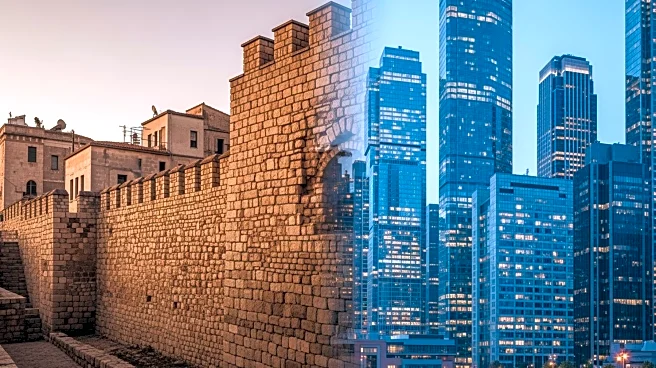



Cities have been central to human civilization for thousands of years, evolving from small settlements to sprawling metropolises. This article explores the historical development of cities, highlighting key milestones and transformations that have shaped urban life as we know it today.
Ancient Beginnings
The concept of a city has ancient roots, with early examples found in Mesopotamia, Egypt, and the Indus Valley. These early cities were often characterized by their
strategic locations near water sources, which facilitated trade and agriculture. Mesopotamian cities like Uruk and Ur were among the first to emerge, serving as centers of political and economic activity.
In ancient Egypt, cities such as Thebes and Memphis played crucial roles in the administration and religious life of the civilization. These cities were often built around temples and palaces, reflecting their importance in the cultural and spiritual life of the society. Similarly, the Indus Valley civilization boasted sophisticated urban planning, with cities like Mohenjo-Daro featuring advanced sanitation systems.
Medieval and Renaissance Transformations
During the medieval period, cities in Europe began to flourish as centers of trade and commerce. The rise of city-states in Italy, such as Florence and Venice, marked a significant shift in urban development. These city-states became powerful economic hubs, with their influence extending across Europe and the Mediterranean.
The Renaissance period saw further advancements in urban planning and architecture. Cities like Milan and Genoa became renowned for their cultural and artistic contributions, attracting scholars and artists from across the continent. The growth of cities during this time was fueled by the expansion of trade networks and the rise of merchant classes.
Modern Metropolises
The industrial revolution brought about a dramatic transformation in the structure and function of cities. Urban areas expanded rapidly as people moved from rural regions to cities in search of employment opportunities. This period saw the rise of modern metropolises, characterized by their dense populations and extensive infrastructure.
Today, cities continue to evolve, driven by technological advancements and globalization. Modern cities are not only centers of economic activity but also hubs of cultural exchange and innovation. The challenges of urbanization, such as sustainability and resource management, remain central to the future development of cities.
Cities have come a long way from their ancient origins, continually adapting to the changing needs and dynamics of human society. As we look to the future, the evolution of cities will undoubtedly continue to shape the course of human civilization.