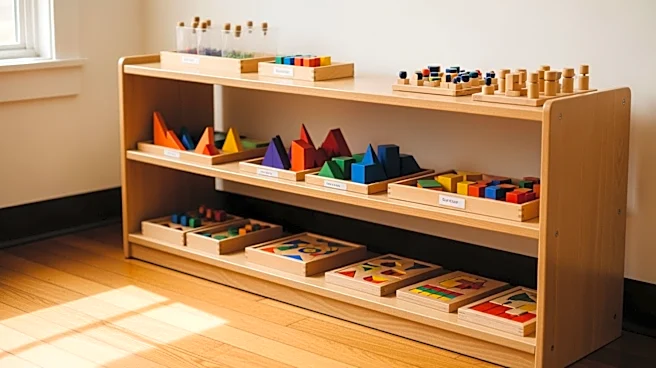










Montessori education is renowned for its child-centered approach, emphasizing independence, hands-on learning, and self-directed exploration. Developed by Maria Montessori, this educational method views children as naturally eager for knowledge and capable of initiating learning in a supportive environment. By focusing on the individual needs and interests of each child, Montessori education offers a unique alternative to traditional teaching methods.
Core Principles
At the heart of Montessori education is the belief in psychological self-construction through environmental interactions. Montessori classrooms are designed to facilitate this process, providing a "prepared environment" tailored to the basic human characteristics and specific needs of children at different ages. This environment encourages children to act freely and choose activities that align with their developmental path.
Montessori education discourages conventional methods of measuring achievement, such as grades and tests. Instead, it promotes a constructivist or "discovery" model, where students learn concepts through hands-on interaction with materials. This approach fosters problem-solving skills, collaboration, and real-world application of knowledge, allowing children to develop independence and confidence.
Classroom Environment
Montessori classrooms are characterized by mixed-age groupings, student autonomy, and long blocks of uninterrupted work time. These elements create a dynamic learning environment where children can explore their interests and learn at their own pace. Specialized educational materials, often made from natural materials like wood, are organized by subject area and are easily accessible to students.
The role of the teacher in a Montessori classroom is to observe and guide rather than instruct. Teachers are trained to recognize each child's unique characteristics, tendencies, and abilities, allowing them to support individual learning paths. This approach fosters a sense of community and collaboration, as older students often help younger ones, creating a supportive and inclusive atmosphere.
Developmental Stages
Montessori education is based on a model of human development, divided into four distinct planes: birth to 6 years, 6 to 12 years, 12 to 18 years, and 18 to 24 years. Each plane is characterized by different learning modes and developmental imperatives, requiring specific educational approaches.
During the first plane, children are seen as concrete, sensorial explorers, engaging in psychological self-construction and building functional independence. The second plane focuses on intellectual independence, moral sense, and social organization. The third plane, encompassing adolescence, emphasizes creative tendencies and the development of a sense of justice and personal dignity.
Montessori education's child-centered approach has proven effective in fostering independence, creativity, and a lifelong love of learning. By prioritizing the individual needs and interests of each child, Montessori education offers a unique and enriching educational experience.