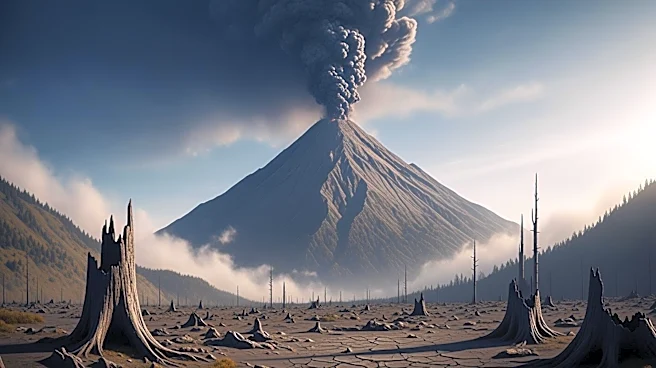








The eruption of Mount St. Helens on May 18, 1980, stands as one of the most significant volcanic events in U.S. history. This catastrophic eruption not only reshaped the landscape but also had profound effects on the surrounding environment and communities. The eruption was preceded by a series of warning signs, including earthquakes and steam-venting episodes, which culminated in a massive explosion that devastated the area.
The Build-Up to Disaster
Mount St. Helens had been
dormant since its last period of activity in the 1840s and 1850s. However, in March 1980, a series of small earthquakes signaled that the volcano was waking up. These tremors were caused by magma moving beneath the surface, creating a large bulge on the mountain's north slope. This bulge was a clear indication of the pressure building up inside the volcano.
As the weeks passed, the seismic activity increased, with earthquakes of magnitude 4 or greater occurring frequently. Despite these warning signs, the exact timing and scale of the eruption remained uncertain. Scientists closely monitored the volcano, but the sheer magnitude of the impending eruption was beyond what anyone had anticipated.
The Eruption Unfolds
On the morning of May 18, 1980, a magnitude 5.1 earthquake triggered the largest subaerial landslide in recorded history. This landslide removed the north face of the mountain, releasing the pressure on the magma chamber and resulting in a massive lateral explosion. The eruption sent a column of ash 80,000 feet into the atmosphere, spreading ash across 11 U.S. states and several Canadian provinces.
The eruption was not just a vertical explosion; it also included a lateral blast that devastated an area of 230 square miles. The pyroclastic flows, consisting of hot gases and volcanic debris, moved at incredible speeds, flattening everything in their path. The eruption's thermal energy was equivalent to 26 megatons of TNT, highlighting the immense power of this natural disaster.
Aftermath and Impact
The immediate aftermath of the eruption was devastating. Fifty-seven people lost their lives, and hundreds of square miles were reduced to wasteland. The eruption caused over $1 billion in damage, destroying homes, bridges, and infrastructure. The landscape was forever altered, with Spirit Lake being filled with debris and the mountain's elevation reduced by over 1,300 feet.
In the years following the eruption, the area around Mount St. Helens was designated as a National Volcanic Monument, allowing scientists to study the recovery of the ecosystem. The eruption of Mount St. Helens remains a stark reminder of the power of nature and the importance of monitoring and understanding volcanic activity.