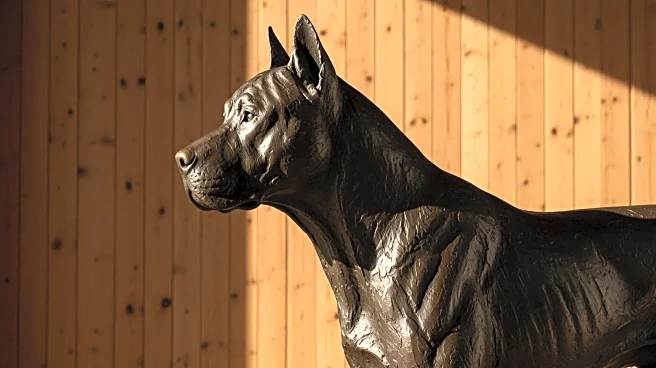




Police dogs, also known as K-9s, have been integral to law enforcement for centuries. Their journey from simple trackers to highly specialized units reflects the evolving needs of society and advancements in training techniques. This article explores the historical development of police dogs, highlighting key milestones and changes in their roles over time.
Early History and Origins
The use of dogs in law enforcement dates back to the Middle Ages. During this period, bloodhounds
were maintained by parish constables to track down outlaws. The first recorded use of police dogs was in the early 14th century in St. Malo, France, where they were employed to guard docks and piers. By the late 14th century, bloodhounds were used in Scotland, known as "Slough dogs," a term that eventually evolved into "Sleuth," meaning detective.
As urbanization increased in England and France during the 19th century, public concern about lawlessness grew. In London, the Bow Street Runners struggled to manage crime, leading to the formation of private associations to assist in law enforcement. Night watchmen were employed to guard premises, equipped with firearms and dogs for protection against criminals.
Modern Era Developments
The late 19th century marked significant advancements in the use of police dogs. In 1889, Sir Charles Warren, Commissioner of the Metropolitan Police of London, attempted to use bloodhounds to track the infamous serial killer Jack the Ripper. Although the attempt was unsuccessful, it highlighted the potential of dogs in policing.
Continental Europe saw the first organized police dog service program in Ghent, Belgium, in 1899. This initiative spread to Austria-Hungary and Germany, where scientific developments in dog breeding and training took place. The German police selected the German Shepherd as the ideal breed for police work and established the first dog training school in 1920.
Contemporary Roles and Training
Today, police dogs are used worldwide for various law enforcement tasks, including drug detection, search and rescue, and suspect apprehension. The Belgian Malinois has become a leading choice for police and military work due to its agility and focus, although German Shepherds remain popular.
Training for police dogs is rigorous, often taking between eight months and a year. Dogs are trained to remember verbal cues and hand gestures, and they regularly participate in training programs with their handlers to reinforce their skills. In many countries, harming a police dog is a criminal offense, reflecting their valued role in law enforcement.
The evolution of police dogs from simple trackers to specialized units demonstrates their enduring importance in maintaining public safety and adapting to the changing needs of society.