






The White House stands as a powerful symbol of American democracy, representing the nation's values and ideals. As the official residence and workplace of the U.S. president, it has become synonymous with the executive branch of government and the presidency itself. This article delves into the cultural and symbolic significance of the White House.
A National Icon
The White House is more than just a building; it is a national icon that embodies the principles of democracy
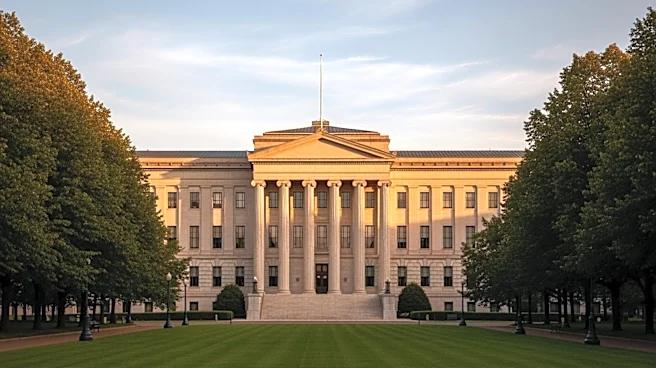
and leadership. Located at 1600 Pennsylvania Avenue NW in Washington, D.C., it has been the residence of every U.S. president since John Adams in 1800. The building's design, modeled after Leinster House in Dublin, reflects the Neoclassical style, symbolizing stability and order.
The name "White House" was officially established by President Theodore Roosevelt in 1901, although it had been colloquially used since 1811. The building's white exterior, originally painted to mask burn damage from the War of 1812, has become a defining feature of its identity.
The People's House
The White House is often referred to as "The People's House," highlighting its role as a public institution. Throughout history, it has been open to the public, with tours and events allowing citizens to connect with their government. This accessibility underscores the democratic values of transparency and accountability.
Presidents have used the White House to engage with the public, hosting receptions, ceremonies, and state dinners. These events foster a sense of unity and national pride, reinforcing the idea that the White House belongs to the American people.
A Global Symbol
On the international stage, the White House represents the United States and its leadership. It is a venue for diplomatic meetings and negotiations, where world leaders gather to discuss global issues. The building's prominence in media and popular culture further cements its status as a symbol of American power and influence.
The White House's architectural grandeur and historical significance make it a focal point for visitors from around the world. As a testament to the nation's resilience and evolution, it continues to inspire and captivate people across the globe.
In conclusion, the White House is a symbol of American democracy, reflecting the nation's values and ideals. Its cultural and symbolic significance extends beyond its physical structure, embodying the principles of leadership, transparency, and unity.