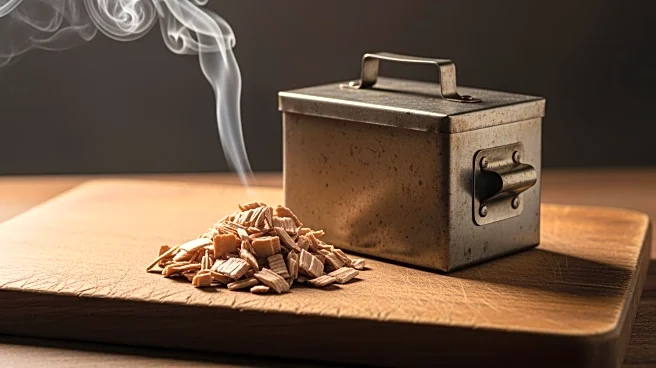




Smoking as a method of cooking and preserving food has a rich history that dates back to the Paleolithic era. This ancient technique has evolved over the centuries, adapting to cultural and technological changes while maintaining its core purpose of flavoring and preserving food. From its early beginnings to its modern applications, smoking has remained a vital part of culinary traditions around the world.
Early Beginnings and Cultural Significance
The practice of smoking food likely began
as a means of preservation. In ancient times, people discovered that exposing food to smoke helped to extend its shelf life by inhibiting the growth of bacteria and other spoilage organisms. This was particularly important in regions where refrigeration was not available.
As smoking techniques spread across different cultures, they were adapted to local tastes and available resources. In Europe, alder was traditionally used for smoking, while oak and beech became more common over time. In North America, indigenous peoples used a variety of woods, including hickory and mesquite, to smoke fish and game. These early methods laid the foundation for the diverse smoking traditions that exist today.
The Evolution of Smoking Techniques
With the advent of modern transportation and refrigeration, the need for smoking as a preservation method diminished. However, the technique continued to thrive as a way to impart unique flavors to food. In the 20th century, technological advancements led to the development of more controlled smoking environments, such as smokehouses and smoker ovens.
In 1939, the invention of the Torry Kiln in Scotland marked a significant milestone in the evolution of smoking. This device allowed for uniform mass-smoking and became the prototype for modern commercial smokers. Despite these advancements, the basic principles of smoking have remained largely unchanged, with a focus on controlling temperature and smoke exposure to achieve the desired flavor and texture.
Modern Applications and Cultural Impact
Today, smoking is celebrated as both a culinary art and a cultural tradition. It is a key component of various regional cuisines, from American barbecue to Scandinavian smoked fish. The technique has also been embraced by home cooks and professional chefs alike, who experiment with different woods, temperatures, and smoking times to create innovative dishes.
In addition to its culinary applications, smoking has become a symbol of cultural identity and heritage. In regions like the southern United States, barbecue competitions and festivals celebrate the rich history and diversity of smoking traditions. As smoking continues to evolve, it remains a testament to the enduring appeal of this ancient cooking method.