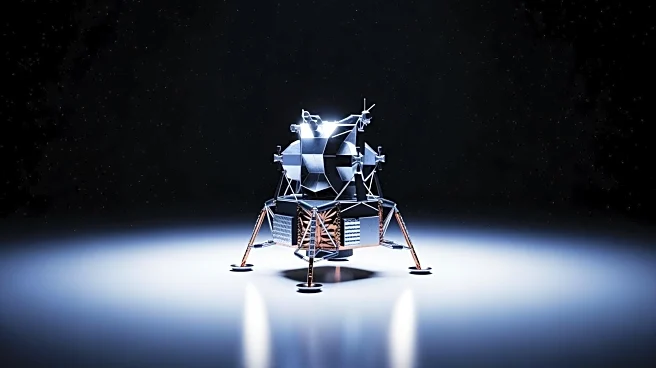




Apollo 5 marked a significant milestone in the journey to land humans on the Moon. Launched on January 22, 1968, this mission was the first uncrewed test flight of the Apollo Lunar Module (LM), a crucial component in NASA's ambitious lunar program. Despite facing numerous delays and technical challenges, Apollo 5 successfully demonstrated the functionality of the LM's subsystems and engines, paving the way for future crewed missions.
The Launch and Objectives
Apollo 5 was launched
from Cape Kennedy using a Saturn IB rocket, designated AS-204. The primary objective of this mission was to verify the operation of the LM's subsystems, including its ascent and descent engines. A critical test known as "fire in the hole" was conducted to ensure that the ascent stage could fire while still attached to the descent stage. This procedure was essential for lunar surface operations and potential aborted landings. The term "fire in the hole" originated from mining, where it signaled the imminent use of explosives.
Additional tests were performed to check the restart capability of the LM engines after initial use. The mission also aimed to test the Instrument Unit in its Saturn V configuration. Despite encountering programming issues that led to an alternate mission plan, Apollo 5 achieved its goals, demonstrating the reliability of the LM systems.
Overcoming Delays and Challenges
The Apollo 5 mission faced significant delays, primarily due to setbacks in the development of the LM, manufactured by Grumman Aircraft. Originally scheduled for April 1967, the launch was postponed multiple times due to manufacturing difficulties. The LM-1 arrived at Kennedy Space Center in June 1967, and the following months were spent testing and assembling the spacecraft atop the Saturn IB.
Further delays occurred due to equipment troubles, including leaks in the LM's ascent stage. These issues required demating and remating of the stages for repairs. Despite these challenges, the mission proceeded, with the countdown beginning on January 21, 1968, leading to a successful launch the next day.
The Impact of Apollo 5
Apollo 5's success was a pivotal moment for NASA, as it demonstrated the functionality of the LM systems, allowing the agency to cancel a planned second uncrewed test flight. This advancement accelerated NASA's timeline for landing astronauts on the Moon by the end of the 1960s.
The mission's success was attributed to the robust hardware and the outstanding flight control teams led by Flight Director Gene Kranz. Although the mission encountered issues during the descent-engine burn, NASA deemed it successful in achieving its objectives. Apollo 5's legacy continued with the first crewed LM flight on Apollo 9 in March 1969, bringing NASA closer to fulfilling President John F. Kennedy's challenge to land a man on the Moon and return him safely to Earth.