
Automatic transmissions have revolutionized the way we drive, offering convenience and ease of use that manual transmissions cannot match. This article explores the historical development of automatic
transmissions, tracing their journey from early innovations to the sophisticated systems we see in vehicles today.
Early Innovations and Challenges
The concept of automatic transmissions dates back to the early 20th century. One of the earliest attempts was the 1904 Sturtevant "horseless carriage gearbox," which is often considered the first true automatic transmission. However, this early design faced significant challenges, including sudden failures due to abrupt gear changes. Despite these setbacks, the idea of an automatic transmission continued to evolve.
In the 1920s, Canadian inventor Alfred Horner Munro developed a transmission that used compressed air instead of hydraulic fluid. Although it lacked the power needed for commercial success, it marked an important step in the evolution of automatic transmissions. By the 1930s, the groundwork was laid for more practical designs, with the introduction of systems that reduced the need for manual clutch operation.
The Rise of Hydraulic Automatics
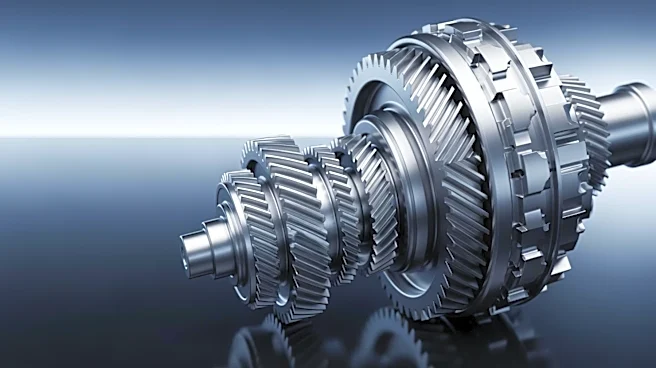
The breakthrough for automatic transmissions came in 1939 with the introduction of the General Motors Hydra-Matic. This was the first mass-produced automatic transmission, combining a fluid coupling with hydraulically controlled planetary gearsets to offer four forward speeds. The Hydra-Matic was a game-changer, providing fully automatic shifting based on engine throttle position and road speed.
Following the Hydra-Matic, other manufacturers began developing their own versions of automatic transmissions. The Buick Dynaflow, introduced in 1948, was the first to use a torque converter instead of a fluid coupling. This innovation allowed for smoother transitions between gears and improved fuel efficiency. By the 1950s, automatic transmissions had become a standard feature in many American cars, with various manufacturers offering their own unique designs.
Modern Advancements and Electronic Controls
The late 20th century saw significant advancements in automatic transmission technology. The introduction of electronic controls in the 1980s allowed for more precise gear shifting and improved fuel efficiency. Solenoids replaced mechanical control methods, enabling faster and smoother transitions between gears.
The number of gear ratios also increased, with five-speed automatics becoming common in the 1990s. The first six-speed automatic was introduced in 2002, followed by seven-speed and eight-speed transmissions in the following years. These advancements have allowed for better performance and fuel economy, making automatic transmissions more appealing to a wider range of drivers.
Today, automatic transmissions continue to evolve, with manufacturers exploring new technologies such as continuously variable transmissions (CVTs) and dual-clutch transmissions (DCTs). These innovations offer even greater efficiency and performance, ensuring that automatic transmissions remain a popular choice for drivers around the world.