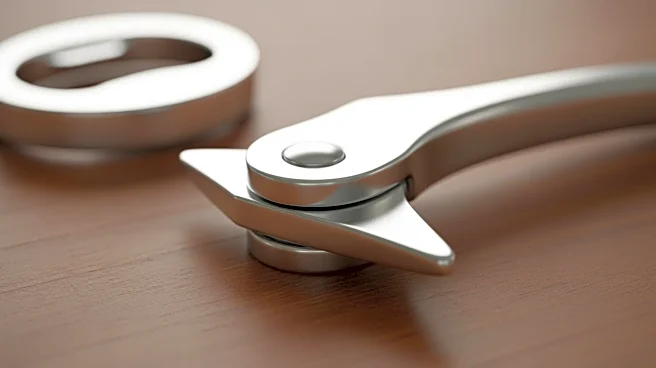




Bottle openers are simple yet ingenious devices that utilize basic mechanical principles to perform their function. While they come in various shapes and sizes, the underlying mechanics remain consistent. This article delves into the mechanical workings of bottle openers, highlighting how they leverage force to remove bottle caps efficiently.
Lever Mechanics
At the heart of every bottle opener is the principle of the lever. A lever is a simple machine that amplifies
an input force to provide a greater output force. In the case of a bottle opener, the lever is used to pry off the metal cap from a bottle. The opener is inserted beneath the pleated metalwork of the cap, using a point on the cap as a fulcrum to pivot.
Most bottle openers function as second-class levers. In this configuration, the fulcrum is located at the far end of the opener, placed on the top of the crown. The output force is applied at the near end of the opener, on the crown edge, between the fulcrum and the hand. This setup allows the user to push up on the lever, effectively removing the cap with minimal effort.
Variations in Design
While the basic lever principle is consistent, bottle openers can be designed to function as first-class levers as well. In this setup, the near end of the opener is placed on the top of the crown, and the far end is positioned under the crown edge. The user then pushes down on the lever, with the output force on the opposite side of the fulcrum from the hand.
This first-class lever configuration is particularly common in bar blades, which form an obtuse angle. Although this setup is mechanically less effective due to a shorter effort arm, it is often easier for users to push down rather than pull up. The design choice between first and second-class levers depends on the specific use case and user preference.
Practical Applications
The mechanical principles of bottle openers are not only fascinating but also highly practical. Understanding these principles can enhance the efficiency and ease of use of bottle openers in various settings. For instance, mounted openers are designed for one-handed operation, making them ideal for busy environments like bars and restaurants.
Moreover, the design of speed openers or bar blades caters to professional bartenders who require quick and efficient bottle opening. These openers are often used in bar flair routines, adding an element of entertainment to the process. By leveraging the mechanics of levers, bottle openers continue to serve as indispensable tools in both domestic and commercial settings.