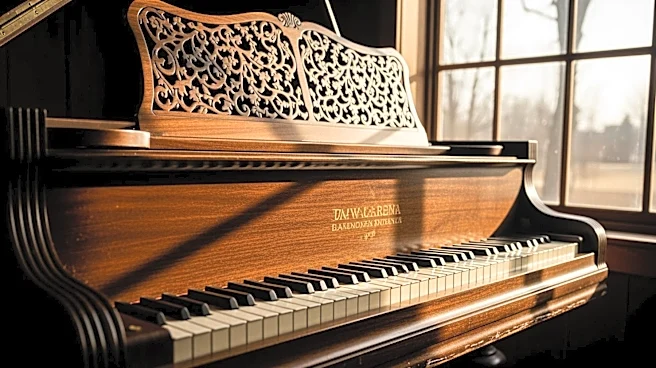








August Wilson's play, 'The Piano Lesson,' is a profound exploration of legacy and identity within an African-American family. Set in 1936 Pittsburgh, the play delves into the Charles family's struggle to reconcile their past with their present, centered around a family heirloom—a piano carved with the faces of their enslaved ancestors. Through the characters' interactions and conflicts, Wilson examines how history shapes identity and the ways in which
individuals choose to honor or reject their heritage.
The Significance of the Piano
The piano in 'The Piano Lesson' is not merely a musical instrument; it is a symbol of the family's legacy and history. Carved by an enslaved ancestor, the piano bears the faces of the Charles family's forebears, representing their struggles and resilience. Berniece, one of the central characters, views the piano as a sacred artifact, a testament to her family's past and a reminder of their suffering. Her brother, Boy Willie, however, sees the piano as a means to an end—a way to purchase land and secure his future. This conflict over the piano's fate highlights the broader theme of how individuals perceive and value their heritage.
Legacy and Self-Worth
Wilson's play poses the question of whether one can acquire self-worth by denying one's past. Boy Willie's desire to sell the piano to buy land reflects his attempt to redefine his identity and escape the shadow of his ancestors' enslavement. He believes that owning land will elevate his status and prove his equality to the white man. Berniece, on the other hand, understands the importance of preserving the piano as a link to their history. Her refusal to sell the piano underscores her belief that self-worth is rooted in acknowledging and honoring one's legacy, rather than erasing it.
The Role of Ancestral Spirits
The presence of ancestral spirits in 'The Piano Lesson' adds a supernatural dimension to the play's exploration of legacy. Sutter's ghost, haunting the Charles household, symbolizes the unresolved issues of the past. Berniece's eventual decision to play the piano and call upon her ancestors to exorcise the ghost signifies her acceptance of her role as the keeper of her family's history. This act of playing the piano becomes a powerful moment of reconciliation, as Berniece embraces her identity and the legacy of her ancestors, finding strength in their stories.