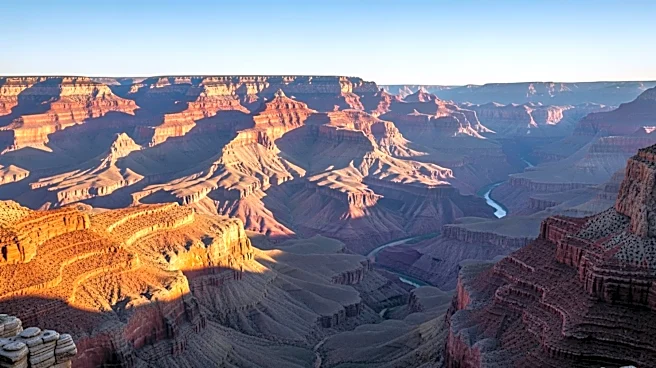





The Grand Canyon is not only a geological wonder but also a site of immense cultural and historical significance. For thousands of years, Native Americans have inhabited the area, considering it a holy site. European explorers later discovered the canyon, leading to its eventual designation as a national park. This article explores the cultural and historical journey of the Grand Canyon.
Native American Heritage
The Grand Canyon has been continuously inhabited by Native Americans
for thousands of years. The Pueblo people considered the canyon a holy site and made pilgrimages to it. The Ancestral Puebloans were the first known people to live in the area, followed by the Cohonina, Sinagua, Hualapai, Havasupai, Southern Paiutes, and Navajo tribes.
These tribes have rich cultural histories and connections to the canyon. The Hualapai inhabit a stretch along the southern side of the canyon, while the Havasupai have lived near Cataract Canyon since the 13th century. The Navajo, or Diné, have a wide area stretching from the San Francisco Peaks eastwards. The Grand Canyon holds mythological significance for some Hopi communities, believed to be the location where humankind arose from the Third World.
European Exploration
The first European known to have viewed the Grand Canyon was García López de Cárdenas from Spain in 1540. He arrived with Hopi guides and a small group of soldiers. The canyon remained largely unexplored by Europeans for over two hundred years until further expeditions in the 18th and 19th centuries.
In 1869, Major John Wesley Powell led the first expedition down the Colorado River through the Grand Canyon. Powell's journey was perilous, with the team facing dangerous rapids and starvation rations. Despite these challenges, Powell's expedition provided valuable insights into the canyon's geography and geology.
National Park Designation
U.S. President Theodore Roosevelt visited the Grand Canyon in 1903 and was a major proponent of its preservation. He established the Grand Canyon Game Preserve in 1906 and later designated it a U.S. National Monument in 1908. Efforts to reclassify the monument as a national park faced opposition from land and mining claim holders.
Finally, in 1919, the Grand Canyon was established as the 17th U.S. National Park by an Act of Congress signed into law by President Woodrow Wilson. The park's designation helped protect the canyon's natural beauty and cultural heritage, ensuring its preservation for future generations.