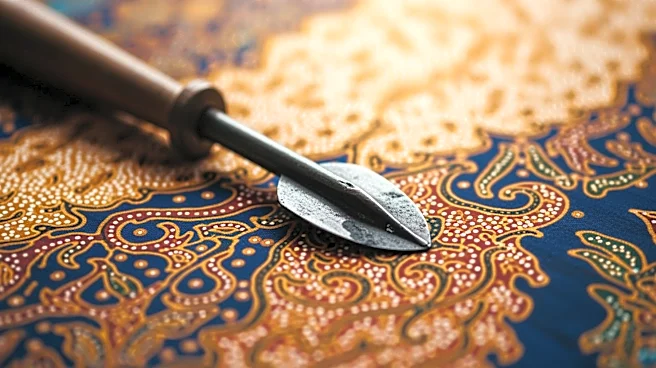







Batik is a fascinating textile art form that has captivated artisans and enthusiasts alike for centuries. Originating from Indonesia, this wax-resist dyeing technique is renowned for its intricate patterns and vibrant colors. The process involves applying wax to fabric to create a resist pattern, which prevents dye absorption in certain areas, resulting in stunning designs. This article delves into the meticulous process of batik creation, highlighting
the artistry and skill involved in this timeless craft.
The Batik Process: A Dance of Wax and Dye
Creating batik is a labor-intensive process that requires precision and patience. It begins with the preparation of the base cloth, which is washed, soaked, and beaten to ensure it is ready for the wax application. Artisans then sketch patterns on the fabric using a pencil before applying hot wax with a canting tool or a cap stamp. The wax acts as a dye-resist, allowing for the creation of intricate designs once the fabric is dyed.
The dyeing process is equally complex, as the waxed cloth is dipped into vats of dye to achieve the desired color. After dyeing, the wax is removed by boiling or scraping, revealing the patterned negative on the cloth. This process can be repeated multiple times to incorporate various colors and patterns, showcasing the artisan's skill and creativity.
Tools of the Trade: Canting and Cap
The tools used in batik creation are as important as the technique itself. The canting tool, a pen-like instrument with a small copper reservoir, is used to draw fine lines and dots with molten wax. This tool allows for the creation of detailed patterns, making it essential for traditional "written batik" or batik tulis.
For larger designs or mass production, artisans use a cap stamp, made of copper strips and wires. This tool enables the efficient application of wax to the fabric, reducing the time and effort required to produce batik cloth. Despite the use of stamps, the process still demands a high level of skill to ensure the quality and precision of the designs.
The Evolution of Batik: Tradition Meets Innovation
While traditional batik techniques remain popular, modern innovations have expanded the possibilities of this art form. Synthetic dyes have simplified the dyeing process, allowing for brighter colors and faster production. Additionally, batik painting, or batik lukis, has emerged as a contemporary method, using brushes to apply wax and create free-form designs.
These innovations have not only preserved the traditional aspects of batik but also allowed for new expressions and styles. Today, batik is celebrated worldwide, influencing fashion and textile art across cultures. The enduring appeal of batik lies in its ability to blend tradition with modernity, making it a timeless craft that continues to inspire.