

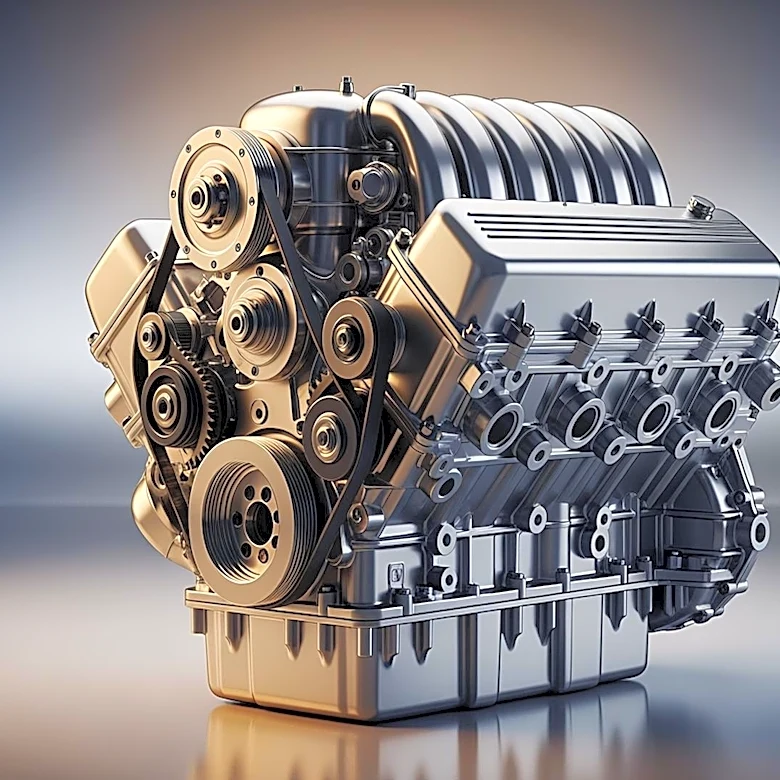


Mazda's Wankel engine has left an indelible mark on the automotive industry, known for its unique rotary design and high power-to-weight ratio. Since its introduction, the engine has been a symbol of innovation, pushing the boundaries of traditional engine design. Mazda's commitment to refining and perfecting the Wankel engine has not only influenced its own vehicle lineup but has also impacted the broader automotive landscape.
The Rise of the Rotary Engine
The Wankel engine, invented
by Felix Wankel in the 1950s, was initially met with skepticism due to its unconventional design. However, Mazda saw potential in the engine's compact size and high power output, leading to its adoption and development. The company's first production Wankel engine, the 10A series, debuted in 1965, marking the beginning of a new era in engine technology.
Mazda's rotary engines quickly gained popularity among kit car builders, hot rodders, and light aircraft enthusiasts, thanks to their light weight and tuning potential. The engines' high power-to-weight ratio made them ideal for performance applications, setting Mazda apart from competitors. The RX-series, including the RX-7 and RX-8, became synonymous with rotary engines, celebrated for their unique design and driving experience.
Overcoming Challenges and Achieving Success
Despite their advantages, Mazda's Wankel engines faced challenges, particularly in terms of fuel efficiency and emissions. The company invested heavily in research and development to address these issues, introducing innovations like turbocharging and advanced fuel injection systems. The 13B-REW engine, with its sequentially-turbocharged design, became a benchmark for rotary engines, offering high performance while meeting environmental standards.
Mazda's dedication to the Wankel engine extended beyond automotive applications. The company explored its use in motorsport, with the engine powering vehicles in the Star Mazda Championship until 2017. Mazda's commitment to innovation ensured that the Wankel engine remained relevant, adapting to changing industry trends and consumer demands.
The Future of Mazda's Rotary Engine
Mazda's Wankel engine continues to evolve, with the company exploring new applications in the era of electric vehicles. In 2023, Mazda reintroduced the engine as a generator for the MX-30 e-Skyactiv R-EV plug-in hybrid, showcasing its versatility and potential as a range extender. This modern iteration features advanced technologies like gasoline direct injection and exhaust gas recirculation, improving efficiency and reducing emissions.
As Mazda looks to the future, the Wankel engine remains a key part of its identity, symbolizing the company's innovative spirit and commitment to pushing the boundaries of engine design. With ongoing research and development, Mazda aims to refine the Wankel engine further, ensuring its legacy continues in the automotive industry.