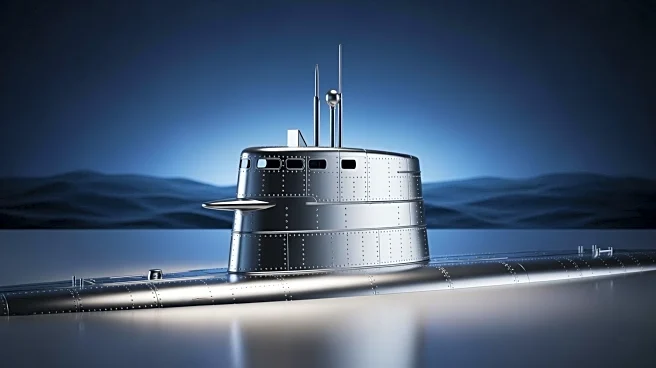




The USS Nautilus (SSN-571) holds a special place in naval history as the world's first nuclear-powered submarine. Commissioned in 1954, it served the United States Navy for over two decades before being decommissioned in 1980. Today, the Nautilus is preserved as a museum ship, allowing visitors to explore its rich history and groundbreaking achievements. This article traces the timeline of the Nautilus from its commissioning to its current status
as a National Historic Landmark.
Commissioning and Early Years
The USS Nautilus was authorized by Congress in 1951, with construction beginning in 1952. It was launched in January 1954, sponsored by Mamie Eisenhower, and commissioned into the United States Navy in September of the same year. The Nautilus was powered by the Submarine Thermal Reactor (STR), later designated the S2W reactor, developed by Westinghouse Electric Corporation.
In its early years, the Nautilus broke many records, traveling to locations previously beyond the limits of submarines. Its nuclear propulsion allowed it to remain submerged far longer than diesel-electric submarines, demonstrating the potential of nuclear power in naval operations. The Nautilus's design and construction revealed limitations that informed improvements in subsequent submarines, contributing to the evolution of the Nuclear Navy.
Historic Achievements and Decommissioning
The USS Nautilus made history on August 3, 1958, by completing the first submerged transit of the North Pole. This achievement was part of Operation Sunshine, a mission ordered by President Eisenhower to showcase American technological prowess following the Soviet Union's launch of Sputnik. The Nautilus navigated beneath the Arctic ice cap, reaching the geographic North Pole and completing a submerged voyage around it.
After serving the United States Navy for over two decades, the Nautilus was decommissioned on March 3, 1980. Its contributions to naval exploration and technology were recognized, and it was designated a National Historic Landmark in 1982.
Preservation as a Museum Ship
The USS Nautilus has been preserved as a museum ship at the Submarine Force Library and Museum in Groton, Connecticut. It attracts around 250,000 visitors annually, allowing them to explore the history of submarine technology and its impact on naval operations. The Nautilus serves as a testament to the pioneering spirit of naval engineering and the advancements in nuclear propulsion technology.
Visitors to the museum can tour the forward two compartments of the Nautilus, guided by an automated system. The preservation of the Nautilus ensures that its legacy continues to inspire future generations, highlighting the significance of its groundbreaking achievements in naval history.