
In May 1969, NASA launched Apollo 10, a mission that served as a critical dress rehearsal for the historic Apollo 11 Moon landing. This mission was designed to test all the components and procedures necessary for a successful lunar landing, without actually touching down on the Moon's surface. The crew, consisting of astronauts Tom Stafford, John Young, and Eugene Cernan, played a pivotal role in ensuring the success of future lunar missions.
The Mission's Objectives
Apollo
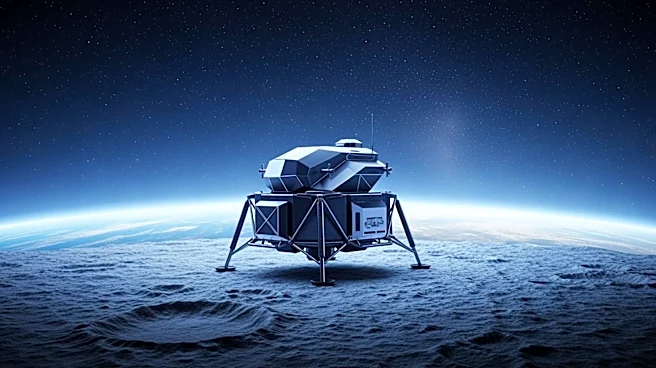
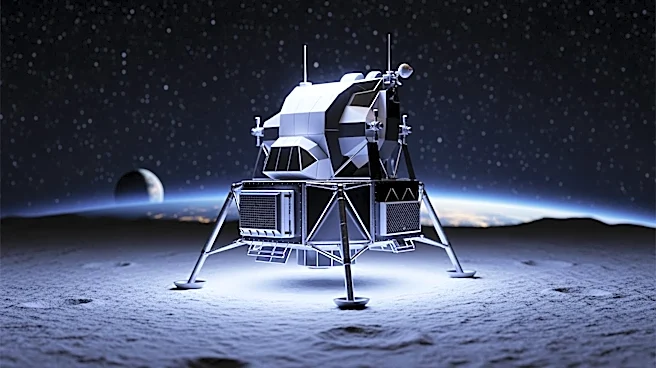
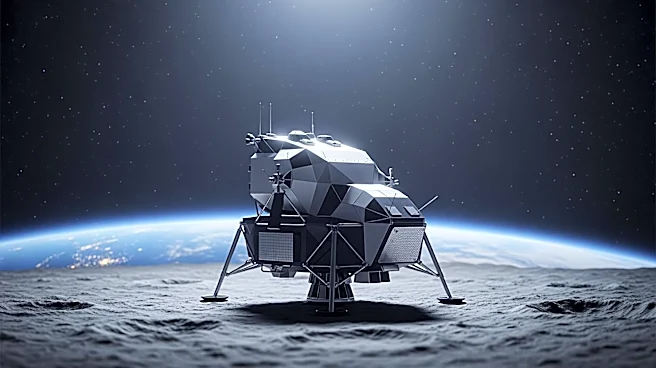
10 was designated as an "F" mission, which meant it was intended to test all spacecraft components and procedures short of an actual descent and landing on the Moon. The mission's primary objective was to simulate a lunar landing as closely as possible, including the trajectory to and from lunar orbit and the timeline of mission events. The crew was tasked with flying the Lunar Module (LM) to within 14.4 kilometers of the lunar surface, the point at which powered descent for landing would begin on a landing mission.
The mission also aimed to evaluate the performance of the Lunar Module in lunar orbit and to photograph Apollo 11's planned landing site in the Sea of Tranquility. This was crucial for ensuring that the site was suitable for a safe landing. The mission's success in these areas provided NASA with the confidence needed to proceed with the first crewed lunar landing.
Challenges and Achievements
Despite its success, Apollo 10 was not without its challenges. The crew encountered pogo oscillations during the launch phase and a brief, uncontrolled tumble of the LM ascent stage in lunar orbit. However, these issues were resolved, and the mission accomplished its major objectives. The crew spent 61 hours and 37 minutes orbiting the Moon, with Stafford and Cernan flying the LM apart from Young in the Command and Service Module (CSM) for about eight hours.
One of the mission's most notable achievements was setting the record for the highest speed attained by a crewed vehicle relative to the Earth's surface: 39,897 kilometers per hour during the return from the Moon. This record still stands today, highlighting the mission's significance in the history of space exploration.
The Legacy of Apollo 10
Apollo 10's success paved the way for the historic Apollo 11 mission, which fulfilled President John F. Kennedy's challenge to land an astronaut on the Moon and return him safely to Earth by the end of the 1960s. The mission demonstrated the capabilities of the mission hardware and systems, and the precision of lunar orbital navigation improved significantly.
The data and experience gained from Apollo 10 were instrumental in ensuring the success of Apollo 11. The mission's legacy is a testament to the dedication and ingenuity of the astronauts and the thousands of people who worked tirelessly to make lunar exploration a reality.