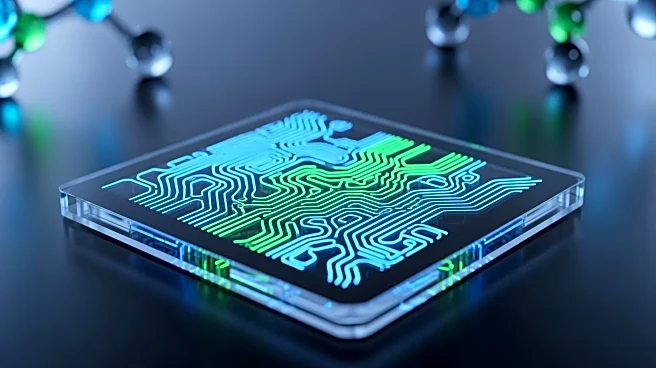




Synthetic biological circuits are at the forefront of biotechnology, offering innovative solutions for modifying cellular functions and creating engineered biological machines. These circuits, which mimic electronic circuits, are designed to perform logical functions using biological parts within cells. By implementing rational, controllable logic elements, researchers can harness living systems to perform a wide range of useful functions. This article
explores the development and applications of synthetic biological circuits in biotechnology, highlighting their potential to transform industries.
The Development of Synthetic Biological Circuits
The concept of synthetic biological circuits emerged from studies of natural gene circuits, such as the lac operon. Researchers discovered that E. coli preferentially consumes glucose before switching to lactose metabolism, controlled by a two-part mechanism on the lac operon. This understanding paved the way for the development of synthetic circuits, which can modify cellular functions and create responses to environmental conditions.
Early examples of synthetic biological circuits include the bistable switch and the Repressilator, both published in 2000. The bistable switch, developed by Gardner et al., uses mutual repression between control units to create a toggle switch capable of controlling cells in a bistable manner. The Repressilator, created by Elowitz and Leibler, forms a negative feedback loop that produces oscillations of protein levels in E. coli. These pioneering circuits demonstrated the potential of synthetic biology to engineer complex cellular systems.
Applications in Biotechnology
Synthetic biological circuits have diverse applications in biotechnology, including pharmaceutical production and fuel production. By introducing synthetic cellular circuits, researchers can facilitate the creation of products or inhibit competing pathways. These circuits enable precise control over gene expression, allowing for the development of cells that respond to environmental stimuli or degrade toxins.
The biotechnology industry utilizes synthetic circuits for the production of recombinant proteins for therapeutic use. By placing genes under the control of synthetic promoters, researchers can induce protein production at specific stages of cell growth. This approach enhances the efficiency and specificity of protein production, offering new possibilities for therapeutic applications.
Challenges and Future Directions
Despite the promising applications of synthetic biological circuits, challenges remain in understanding cellular networks and natural circuitry. The development of more robust systems with precise control and feedback is hindered by limited knowledge of cellular pathways. However, the creation of a comprehensive toolbox of genetic parts could enable the design of synthetic cells with well-defined pathways, enhancing predictability and effectiveness.
As research in synthetic biology advances, the potential for synthetic biological circuits to transform biotechnology continues to grow. By harnessing the power of engineered cellular systems, researchers can develop innovative solutions for a wide range of applications, from medicine to environmental sustainability.