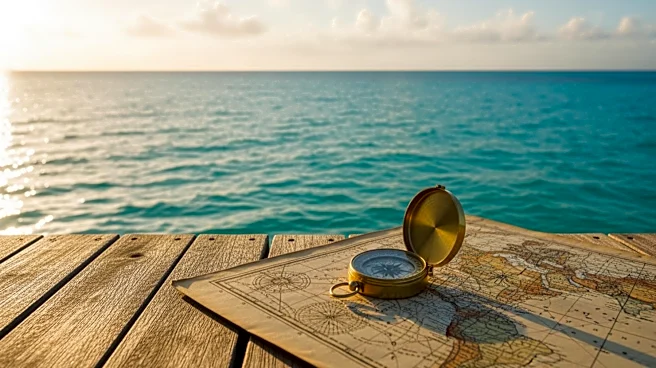










The Caribbean Sea has played a pivotal role in the history of exploration and colonization. Its strategic location and rich resources attracted European powers, leading to a complex history of conquest, trade, and cultural exchange. From the arrival of Christopher Columbus to the era of piracy and colonial rivalry, the Caribbean Sea has been at the center of significant historical events.
Early Exploration and Colonization
The Caribbean Sea was first encountered by Europeans in 1492
when Christopher Columbus sailed into its waters during his quest for a new route to Asia. Mistaking the islands for the East Indies, Columbus's voyages marked the beginning of European exploration and colonization in the Americas. The Spanish quickly established settlements on islands such as Hispaniola, Cuba, and Puerto Rico, exploiting the region's resources and indigenous populations.
The Caribbean's strategic location made it a focal point for European powers seeking to expand their empires. The Spanish initially dominated the region, but by the 17th century, other European nations, including the French, Dutch, and English, began to establish their own colonies. These powers were drawn by the lucrative opportunities in sugar production and trade.
The Age of Piracy and Colonial Rivalry
The Caribbean Sea became notorious for piracy during the 16th and 17th centuries. Pirates and privateers, often sanctioned by rival European powers, targeted Spanish ships laden with gold and silver. The region's numerous islands and hidden coves provided ideal hideouts for these seafaring outlaws. Figures like Blackbeard and Captain Kidd became legendary, contributing to the romanticized image of Caribbean piracy.
Colonial rivalry in the Caribbean was intense, with European powers vying for control of valuable territories. The islands changed hands frequently through treaties and wars, reflecting the shifting balance of power in Europe. The Caribbean's sugar plantations, worked by enslaved Africans, became the economic backbone of many colonies, further fueling competition and conflict.
Legacy and Cultural Impact
The historical events that unfolded in the Caribbean Sea have left a lasting legacy on the region's culture and identity. The blending of indigenous, African, and European influences has created a unique cultural tapestry. Languages, religions, and traditions from these diverse origins continue to shape Caribbean societies today.
The Caribbean Sea's history is a testament to the region's importance in global affairs. Its role in exploration, colonization, and trade has had far-reaching effects, influencing the course of history in the Americas and beyond. Understanding this history provides valuable insights into the complex dynamics that have shaped the Caribbean and its people.