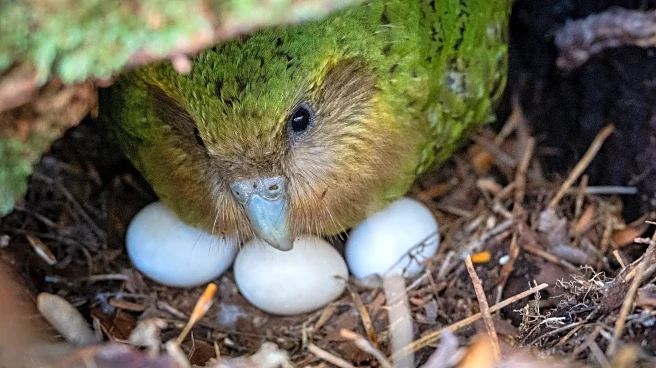




The Carolina parakeet, once a vibrant presence in the eastern United States, met a mysterious and rapid extinction in the early 20th century. Known for its bright green plumage and colorful head, this parrot species was the only indigenous parrot within its range. Despite its prevalence, the Carolina parakeet vanished from the wild by 1910, with the last captive bird dying in 1918. The exact causes of its extinction remain uncertain, though several
factors are suspected.
Flocking Behavior and Hunting
One of the peculiar behaviors of the Carolina parakeet was its tendency to flock together, even in the face of danger. This behavior made them particularly vulnerable to hunting. When one bird was shot, others would return to the vicinity, making it easy for hunters to kill large numbers at once. This flocking behavior, combined with the demand for their colorful feathers for fashion, contributed significantly to their decline.
Hunting was not the only threat. The birds were also considered agricultural pests, as they fed on crops like apples and grains. Farmers often shot them to protect their harvests, further reducing their numbers. Despite these pressures, the species was noted to have vigorous flocks as late as 1896, indicating that hunting alone was not the sole cause of their extinction.
Disease and Habitat Loss
While deforestation was a concern, it was not the final cause of extinction, as sufficient nesting sites remained intact. American ornithologist Noel F. Snyder speculated that disease might have played a crucial role. He suggested that the birds could have succumbed to poultry diseases, although there is no historical evidence of New World parrot populations being affected by such diseases. The modern poultry scourge Newcastle disease was not detected until 1926, well after the parakeet's disappearance.
The rapid decline of the Carolina parakeet remains somewhat of a mystery. Despite the presence of juveniles and reproducing pairs, the species virtually disappeared by 1904. Genetic evidence suggests a quick decline without significant inbreeding, pointing to an abrupt and catastrophic event.
Declaring Extinction
The American Ornithologists' Society declared the Carolina parakeet extinct in 1939, although the IUCN listed it as extinct since 1920. Reports of sightings continued into the late 1920s, but these were not supported by specimens. Two sets of eggs purportedly taken from active nests in 1927 are held by the Florida Museum of Natural History, suggesting the possibility of breeding at that time.
The extinction of the Carolina parakeet is a poignant reminder of the fragility of wildlife and the impact of human activities. Despite its vibrant presence in the past, the parakeet's disappearance remains a cautionary tale of the consequences of unchecked hunting and habitat disruption.