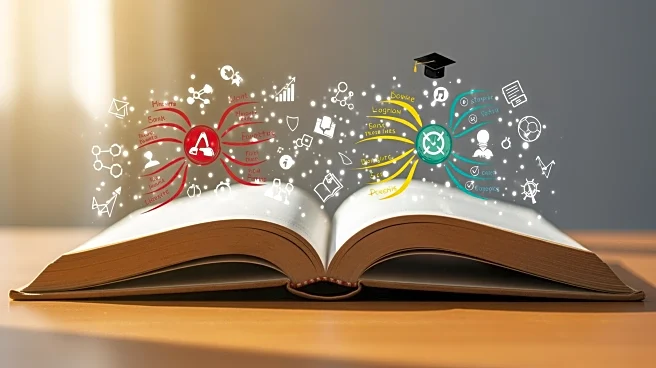




Personal knowledge management (PKM) is a multifaceted process that involves various models and frameworks to help individuals manage their knowledge effectively. These models provide structured approaches to organizing, retrieving, and sharing information, enabling individuals to enhance their productivity and learning. This article explores some of the key models and frameworks in PKM, highlighting their components and significance.
Wright's Model
One of the prominent
models in personal knowledge management is Wright's model, which encompasses four interrelated domains: analytical, information, social, and learning. The analytical domain focuses on competencies such as interpretation, application, and creation, allowing individuals to contextualize information effectively. The information dimension involves sourcing, assessing, organizing, and communicating information, ensuring that individuals have access to relevant knowledge.
The social dimension emphasizes collaboration and networking, encouraging individuals to develop both close and extended networks. This aspect of the model highlights the importance of dialogue and interaction in knowledge sharing. Finally, the learning dimension involves expanding pattern recognition and sensemaking capabilities, fostering reflection and the development of new knowledge. Wright's model underscores the significance of both bonding and bridging networks in personal knowledge management.
SECI Model and Smedley's Adaptation
Another influential framework in PKM is Nonaka and Takeuchi's SECI model, which distinguishes between tacit and explicit knowledge. The interaction between these two types of knowledge results in the creation of new knowledge, a process central to effective knowledge management. Smedley has adapted this model for PKM, incorporating the role of an expert who provides direction while a community of practice supports personal knowledge creation.
Trust is a central element in Smedley's adaptation, facilitating knowledge sharing and collaboration. This model emphasizes the importance of community support in personal knowledge management, allowing individuals to leverage collective expertise and insights.
Zhang's Model
Zhang's model offers another perspective on PKM, focusing on the relationship between personal and organizational knowledge management. This model considers two axes: knowledge properties and management perspectives, either organizational or personal. The OAPI process (organizationalize, aggregate, personalize, and individualize) connects organizational and personal knowledge, enabling individuals to operationalize personal knowledge as organizational knowledge.
In conclusion, models and frameworks in personal knowledge management provide valuable insights into how individuals can effectively manage their knowledge. By understanding and applying these models, individuals can enhance their ability to organize, retrieve, and share information, ultimately supporting their personal and professional growth.