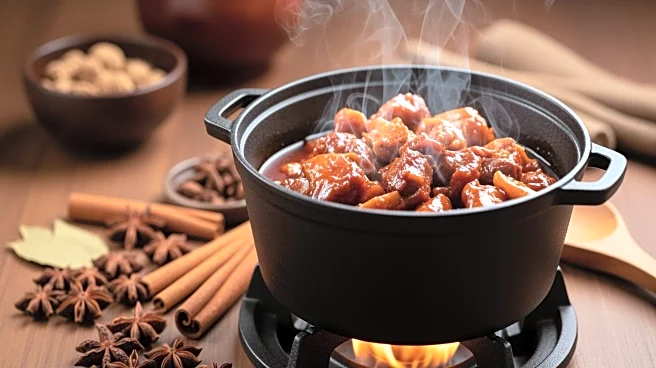




Red cooking, also known as Chinese stewing or red braising, is a distinctive cooking method that imparts a reddish-brown color to food. This technique is deeply rooted in Chinese culinary traditions, particularly in the Jiangnan region. Red cooking involves slow braising with soy sauce, fermented bean paste, and rock sugar, creating a rich and flavorful dish. This article explores the ingredients and cultural significance of red cooking.
Ingredients and Techniques
Red cooking
typically uses a mix of light and dark soy sauce, fermented bean paste, red fermented tofu, and rock sugar to flavor and color the food. These ingredients not only enhance the taste but also give the dish its characteristic reddish-brown hue. Sometimes, food coloring is added for a more intense coloration.
The technique involves stewing or braising with soy sauce, Chinese rice wine, and rock sugar. Whole spices like star anise, black cardamom, cassia, or fennel seeds are crucial elements, used in moderation to avoid overpowering the main ingredients. Red-cooked stews can be rich in meat content or include a variety of meats, vegetables, and hard-boiled eggs.
Cultural Significance
Red cooking is more than just a cooking method; it is a cultural tradition that reflects the rich culinary heritage of China. Originating in Jiangsu province, it is most strongly associated with the Jiangnan region. The technique is used throughout China, showcasing the versatility and adaptability of Chinese cuisine.
The use of soy sauce and fermented ingredients in red cooking highlights the importance of fermentation in Chinese culinary practices. These ingredients not only add flavor but also preserve the food, a crucial aspect in traditional cooking methods. Red cooking is often served during special occasions and family gatherings, symbolizing warmth and togetherness.
Variations and Adaptations
While red cooking is a traditional technique, it has evolved over time to include various adaptations. Different regions in China have their own versions, incorporating local ingredients and flavors. For example, in some areas, red cooking may include additional spices or use different types of soy sauce.
The technique has also been adapted in modern cooking, with chefs experimenting with new ingredients and methods. Despite these changes, the essence of red cooking remains the same: a slow braising process that results in a flavorful, aromatic dish. Whether served hot or cold, red-cooked dishes continue to be a beloved part of Chinese cuisine.