





Mississippi, a state in the southeastern United States, is known for its rich cultural heritage and significant geographical features. Bordered by Tennessee, Alabama, the Gulf of Mexico, Louisiana, and Arkansas, Mississippi's landscape is largely defined by the Mississippi River, which forms much of its western boundary. The state's political structure and geographical features have played a crucial role in shaping its history and development.
Geographical Boundaries
Mississippi's
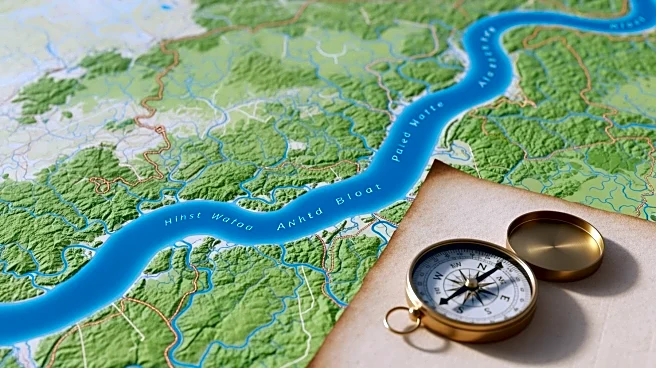
geographical boundaries are marked by significant natural features. To the north, it borders Tennessee, while Alabama lies to the east. The Gulf of Mexico forms the southern boundary, providing Mississippi with access to maritime resources and trade routes. To the southwest, Louisiana shares a border with Mississippi, and Arkansas lies to the northwest. The Mississippi River, a major waterway in the United States, defines much of the state's western boundary. This river has historically been a vital transportation route and a source of economic activity, influencing the development of the region.
The state's topography is characterized by lowland plains and low hills, with the east Gulf Coastal Plain covering most of the area. The Mississippi Delta, located in the northwest, is a significant geographical feature known for its fertile soil, which has supported agriculture for centuries. The highest point in Mississippi is Woodall Mountain, standing at 807 feet above sea level, while the lowest point is at the Gulf of Mexico.
Political Structure
Mississippi's political structure is based on the traditional separation of powers, with a strong alignment towards conservative values. The state has a governance system that includes an executive branch led by the governor, a legislative branch consisting of the Mississippi Legislature, and a judicial branch. This structure ensures a balance of power and allows for the effective administration of state affairs.
The state capital, Jackson, is also the largest city in Mississippi and serves as the political and economic center. Greater Jackson is the most populous metropolitan area in the state, with a population of over half a million people. Other major cities include Gulfport, Southaven, Hattiesburg, and Biloxi, each contributing to the state's diverse political and cultural landscape.
Economic and Cultural Impact
Mississippi's economy relies heavily on agriculture, manufacturing, and tourism. The state is a leading producer of farm-raised catfish, sweet potatoes, cotton, and pulpwood. The presence of casinos and historical sites has also boosted tourism, making it an essential part of the state's economy. Culturally, Mississippi is renowned for its deep religious roots and its significant contributions to music, particularly as the birthplace of the blues. This rich cultural heritage continues to influence the state's identity and attract visitors from around the world.
Overall, Mississippi's geographical features and political structure have played a pivotal role in shaping its history and development. The state's diverse landscape and cultural heritage continue to define its unique character and influence its future trajectory.