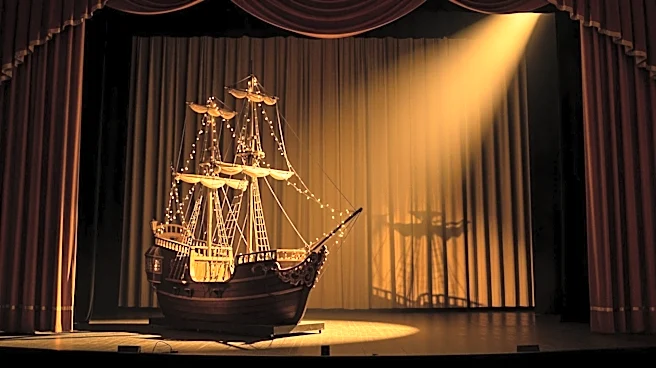

Peter Pan has captivated audiences for generations, evolving from J.M. Barrie's original 1904 play into various adaptations, including the 1950 musical. This transformation highlights the enduring appeal
of the story and its characters, as well as the creative efforts to bring them to life in new ways. The 1950 musical adaptation, with music and lyrics by Leonard Bernstein, marked a significant milestone in the journey of Peter Pan from stage to musical theater.
The Original Play
J.M. Barrie's play, "Peter Pan, or The Boy Who Wouldn't Grow Up," debuted in 1904 and introduced audiences to the magical world of Neverland. The play's themes of childhood innocence and the refusal to grow up resonated deeply, making it a beloved classic. Barrie's imaginative storytelling and memorable characters, such as Peter Pan, Wendy, and Captain Hook, laid the foundation for future adaptations.
The play's success was immediate, and it quickly became a staple in theaters. Its whimsical narrative and the concept of flying captured the imaginations of both children and adults. Barrie's ability to blend fantasy with poignant moments of reality ensured that Peter Pan would remain a timeless tale.
Transition to Musical
The transition from play to musical began with the 1950 adaptation, which opened on Broadway on April 24, 1950. This version featured music and lyrics by Leonard Bernstein, adding a new dimension to Barrie's story. The musical starred Jean Arthur as Peter Pan and Boris Karloff in the dual roles of George Darling and Captain Hook, bringing a fresh interpretation to the characters.
Bernstein's involvement brought a rich musical score to the production, although only five songs were included to accommodate the vocal ranges of the cast. Despite this limitation, the musical successfully captured the essence of Barrie's play while introducing audiences to a new way of experiencing the story. The musical ran for 321 performances, closing on January 27, 1951, and solidified Peter Pan's place in musical theater history.
Legacy and Impact
The 1950 musical adaptation of Peter Pan paved the way for future productions and adaptations. It demonstrated the versatility of Barrie's story, showing that it could be reimagined in various formats while retaining its core themes. The musical's success inspired subsequent adaptations, including the 1954 musical by Jule Styne and Moose Charlap, which became a box office hit.
Peter Pan's journey from play to musical highlights the enduring appeal of its characters and narrative. Each adaptation brings something new to the table, ensuring that Peter Pan remains a beloved story for audiences of all ages. The 1950 musical was a pivotal moment in this journey, showcasing the creative possibilities of bringing Barrie's world to life through music and performance.