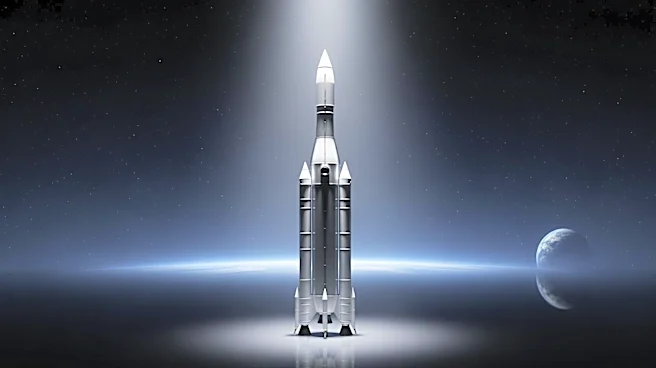





Alan Shepard's journey aboard Mercury-Redstone 3, also known as Freedom 7, marked a significant moment in U.S. space history. As the first American astronaut to travel into space, Shepard's mission on May 5, 1961, was a testament to his skill and courage. This article delves into Shepard's experiences during the mission and his contributions to the success of Project Mercury.
Shepard's Selection and Preparation
Alan Shepard was chosen as the primary pilot for the Mercury-Redstone 3 mission
by Robert R. Gilruth, the head of the program. Shepard's selection was based on his expertise and readiness to undertake the challenging mission. Alongside John Glenn and Gus Grissom, who served as backups, Shepard underwent rigorous training to prepare for the flight.
The mission faced several delays due to technical issues and weather conditions. Shepard's name was kept confidential until the initial launch attempt was canceled, reflecting the careful planning and flexibility required for such a high-stakes mission. Despite these challenges, Shepard remained focused and prepared, demonstrating his commitment to the success of the mission.
The Flight Experience
During the 15-minute suborbital flight, Shepard experienced the intense g-forces of launch and re-entry. He tested the capsule's attitude control system, manually controlling the spacecraft's orientation. Shepard's observations of Earth from the capsule's periscope provided valuable insights into the capabilities of the spacecraft.
One of the notable moments of the mission was Shepard's need to urinate while waiting for the launch. With no urine collection device on board, Shepard had to urinate in his suit, leading to modifications in future space suit designs. This incident highlighted the practical challenges faced by astronauts during space missions.
Legacy and Impact
Alan Shepard's successful mission aboard Freedom 7 was a significant achievement for the U.S. space program. It demonstrated the feasibility of human spaceflight and set the stage for future missions. Shepard's naming of the spacecraft as Freedom 7 established a tradition for the Mercury astronauts, with each capsule name ending in "7" to honor the original group of seven astronauts.
Shepard's courage and determination during the mission inspired future generations of astronauts. His contributions to the success of Project Mercury were instrumental in advancing the U.S. space program. Today, Shepard is remembered as a pioneer of space exploration, and his mission aboard Freedom 7 remains a symbol of American ingenuity and perseverance.