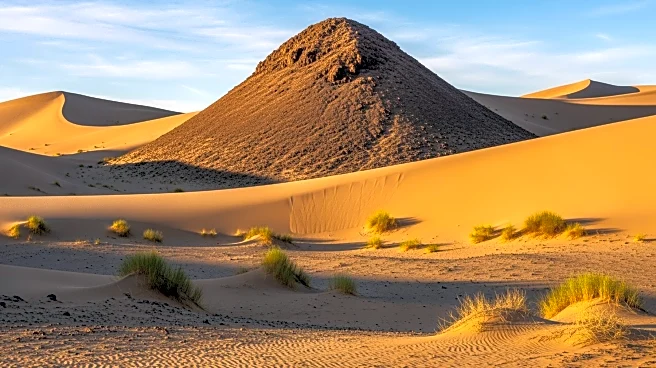




The Gran Desierto de Altar, located in the Sonoran Desert of Mexico, is renowned for its striking volcanic features. This region is part of the El Pinacate y Gran Desierto de Altar Biosphere Reserve, a UNESCO World Heritage Site. The volcanic landscape, characterized by craters and lava flows, offers a unique glimpse into the geological history of North America.
The Pinacate Volcanic System
At the heart of the Gran Desierto de Altar lies the Pinacate volcanic system, a prominent
feature of the landscape. This system includes three main peaks: Pinacate, Carnegie, and Medio. The highest peak, Cerro del Pinacate, stands at 1,190 meters and is a testament to the region's volcanic activity.
The Pinacate Mountains are known for their orogenic features, which are the result of volcanic eruptions over millions of years. These eruptions have created a variety of geological formations, including compact lava rocks, sand, and volcanic ash. The colors and textures of these formations add to the visual appeal of the desert.
Maar Craters and Volcanic Activity
The Gran Desierto de Altar is home to the greatest concentration of Maar craters in North America. These craters, such as El Elegante, Cerro Colorado, MacDougal, and Sykes, are formed by explosive volcanic activity. The craters are surrounded by extensive areas of active dunes, creating a dynamic and ever-changing landscape.
Volcanic activity in the region has been sporadic, with eruptions occurring over the past 4 million years. The most recent activity was about 11,000 years ago, leaving behind a legacy of geological features that continue to intrigue scientists and visitors alike.
Geological Significance and Exploration
The volcanic landscape of the Gran Desierto de Altar has attracted explorers and scientists for decades. NASA even sent astronauts to the region between 1965 and 1970 to train for lunar missions, due to the similarities between the desert terrain and the lunar surface.
The geological significance of the Gran Desierto de Altar extends beyond its volcanic features. The region serves as a natural laboratory for studying the processes of volcanism and desertification. Its unique combination of volcanic and desert landscapes provides valuable insights into the Earth's geological history and the forces that shape our planet.